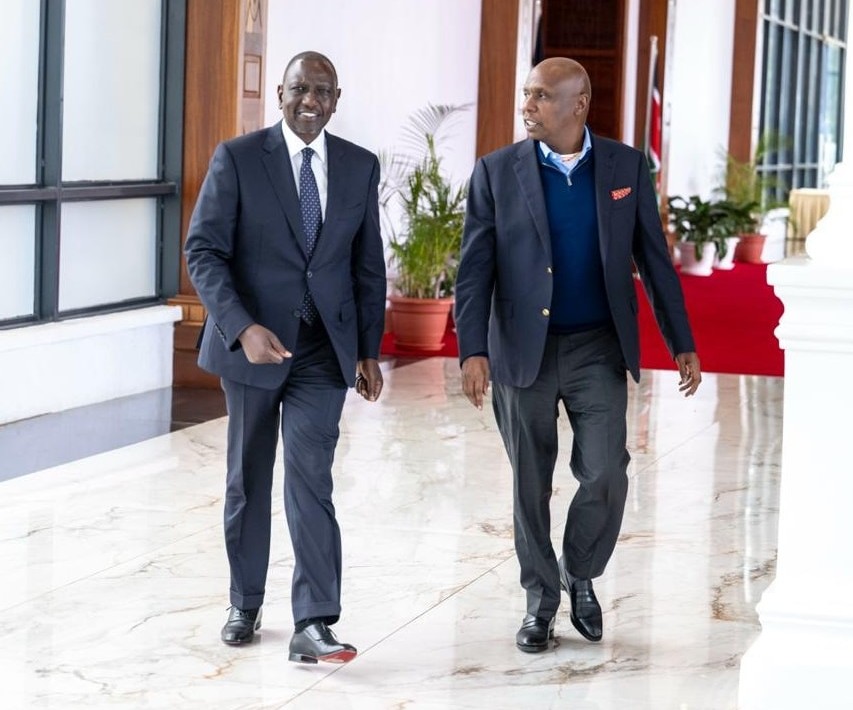
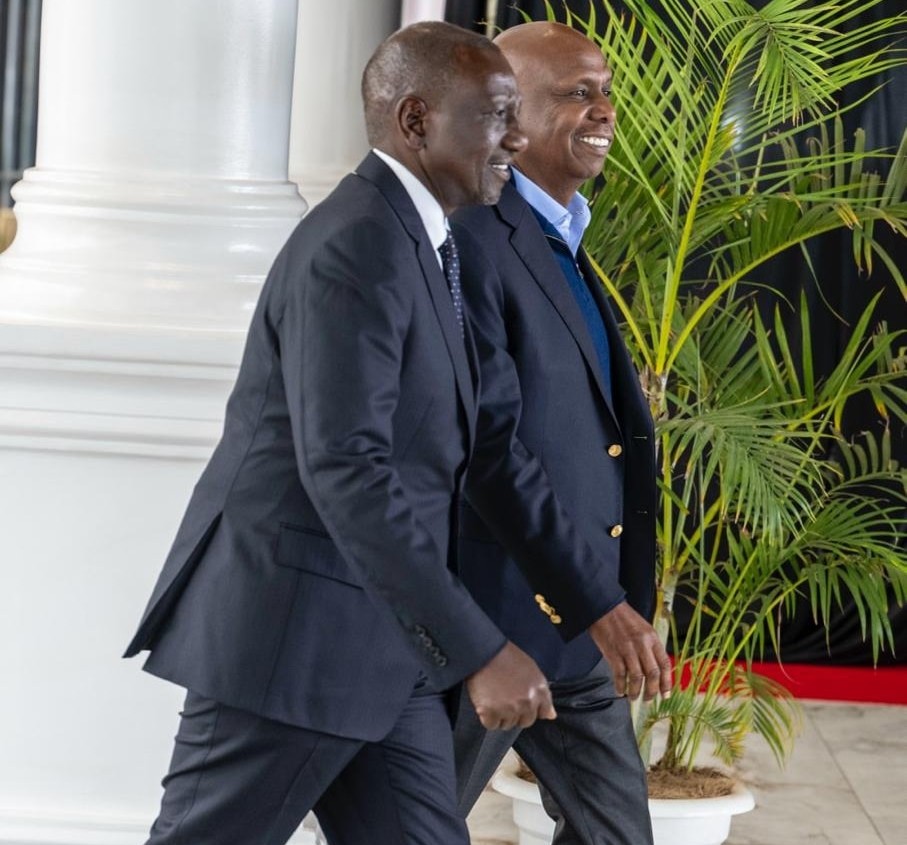
President William Ruto and Kanu chairman Gideon Moi. Photo/Handout
By Newsflash Reporter
The political deal between President William Ruto and former Baringo Senator Gideon Moi has reportedly faltered.
With the development, unease is spreading within Kanu, fueling fresh doubts about a political understanding that was expected to restore the Moi family to the centre of power.
The prolonged silence from State House, the absence of fresh government appointments, and growing restlessness within Kanu have revived questions over whether the much-touted pact between President Ruto and Kanu chairman Gideon Moi ever gained traction—or whether it has quietly collapsed. What was framed as Kanu’s strategic return to government after more than a decade on the political margins is now steeped in uncertainty.
Behind public displays of cooperation, frustration is mounting within the independence party. Senior Kanu figures privately accuse the President of reneging on commitments that convinced Mr Moi to abandon his bid for the Baringo Senate seat and align his party with the government.
‘Gentleman’s agreement’ under strain
Speaking anonymously, a senior Kanu official said there was no formal, written agreement but insisted the President gave assurances of meaningful inclusion in government. “There was no document, but the President committed to bringing us into government and allocating positions. Our boss is unhappy,” the official said.
According to the official, Mr Moi deliberately resisted pressure to formalise the deal, opting instead for a handshake arrangement.
Read more:Gideon Moi eyes 2027 presidency as Gachoka reveals new political strategy
“The chairman did not want anything in writing. He trusted the President’s word and even invited him to address his supporters,” the source said. “So far, there is zero implementation, and no sign that anything will change soon.”
The comments underscore the growing disquiet within Kanu following President Ruto’s highly publicised engagement with the Moi family last October. Insiders say the understanding was brokered with the help of the late Raila Odinga and sealed after several meetings between the two leaders, including one held in Dubai. The arrangement was expected to facilitate Kanu’s return to the heart of government after years in political isolation.
Positions and unpaid bills
Sources familiar with the talks say Mr Moi was eyeing a powerful Cabinet portfolio—possibly Roads and Transport, currently held by Davis Chirchir—or an influential role as deputy chief of staff, which would have paved the way for broader Kanu representation in government.
Other insiders claim Mr Moi’s interests extended beyond politics to unresolved business matters. The reported deal also included the appointment of Kanu loyalists as principal secretaries and ambassadors, alongside the settlement of nearly Sh3 billion owed to companies linked to Mr Moi for geothermal projects under the Geothermal Development Company. Delays in payment, sources say, left Mr Moi exposed to tax demands from the Kenya Revenue Authority despite not having received funds for completed work.
Read more:Ruto, Gachagua, Gideon Moi mourn Jirongo
The most visible sign of the pact was Mr Moi’s sudden withdrawal from the Baringo senatorial by-election scheduled for November 27, 2025, following the death of Senator William Cheptumo. Despite declaring his intention to reclaim the seat he held between 2013 and 2022, Mr Moi failed to submit nomination papers a day after meeting President Ruto at State House. UDA’s Kiprono Chemitei was subsequently declared winner unopposed.
Alliance tested by time and trust
At the time, insiders said the withdrawal was part of a broader understanding that would see Kanu formally absorbed into government through Cabinet, principal secretary, and ambassadorial appointments.
Kanu Secretary-General George Wainaina has downplayed claims that the deal has unravelled, insisting the party was neither deceived nor abandoned. “We were not conned, and we are not stranded. We are part of the broad-based government,” he said, adding that the party would issue a detailed statement soon.
UDA leaders have also maintained that the alliance remains intact, attributing delays to procedural issues. Party chairperson Cecily Mbarire said appointments would follow the conclusion of grassroots elections, which are seen as critical to President Ruto’s 2027 strategy—especially in Mt Kenya, where support has weakened since the impeachment of former Deputy President Rigathi Gachagua.
Read more:Ruto and Gideon seal unity pact as KANU joins broad-based government
Political analysts say the President’s focus on consolidating UDA may explain the delay, but patience within Kanu is wearing thin. The uncertainty has triggered internal tensions, with Samburu East MP Naisula Lesuuda criticising Mr Moi for exiting the Baringo race without consulting party structures.
For President Ruto, the Kanu outreach fits his broader push for a broad-based government, following a similar arrangement with ODM in 2025. For Mr Moi, the stakes are existential. Success could revive Kanu and restore the Moi family’s influence. Failure could deepen divisions and leave the party diminished ahead of 2027.
As murmurs of betrayal grow louder, the survival of the Ruto–Moi pact appears to hinge on whether political goodwill—extended on trust rather than paper—can withstand prolonged silence.


About the Author