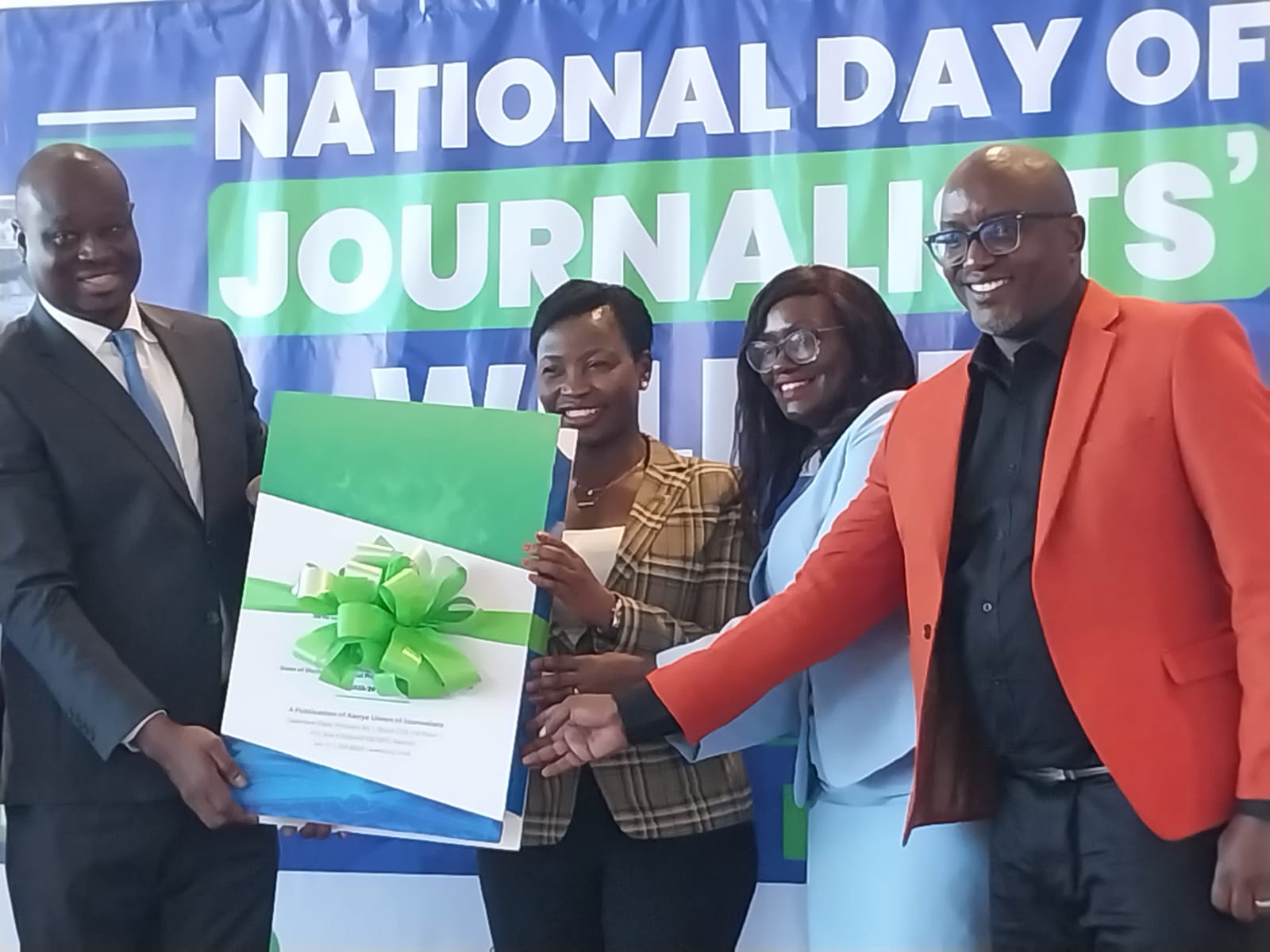
From left: KUJ Secretary-General Eric Oduor hands over a report on the state of journalists’ welfare in Kenya to Principal Secretary for the State Department for Micro, Small and Medium Enterprises Susan Mang’eni in Nairobi on October 30, 2026 /CHARLES WASONGA
BY CHARLES WASONGA
The ability of Kenyan journalists to perform their duties effectively is being undermined by depression linked to low pay, job insecurity, heavy workloads and long working hours, a new survey has revealed.
The survey, conducted by the Kenya Union of Journalists (KUJ) and the Media Council of Kenya (MCK), also found that lack of job fulfilment and unhappiness in the workplace are making it difficult for journalists to discharge their watchdog role in society.
More than half (52 per cent) of the 120 journalists sampled across different ranks and media houses earn less than Sh50,000 per month, according to the survey report launched in Nairobi on Friday, October 30, 2026, during the inaugural National Day of Journalists’ Welfare.
Additionally, 55 per cent of journalists lack job security, working as correspondents, freelancers or contributors.
However, the report, titled The Pain Behind the Byline: State of Welfare and Social Protection for Journalists in Kenya, puts the average monthly salary of Kenyan journalists at Sh63,000, significantly below the private sector average of Sh86,872.
“This is also less than what journalists earn in many countries across the globe, including next door Uganda where journalists take home an average of KSh78,542 monthly,” the report states.
The poor working conditions have contributed to widespread dissatisfaction, with 89 per cent of journalists saying they are looking for employment elsewhere.
In fact, a third of those surveyed said they were planning to leave the profession at the earliest opportunity.
Citizen TV journalist Yvonne Okwara is among the latest high-profile media personalities to exit a newsroom, having left Royal Media Services to join Shuga Global as its Head of Investment and Partnerships.
Several other journalists have previously left newsrooms for opportunities in government, the private sector and non-governmental organisations (NGOs). Others have ventured into politics, with more than a dozen reportedly planning to contest elective positions in the 2027 General Election.
Poor welfare undermines watchdog role
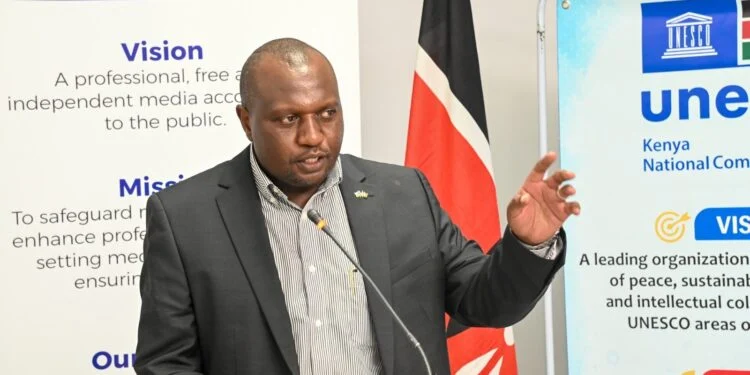
Speaking during the launch of the findings at Emara Ole Sereni Hotel in Nairobi, KUJ Secretary-General Eric Oduor said the report painted a painful picture of the prevailing labour environment in the country’s media industry.
He called for urgent measures to address the challenges facing journalists, warning that their welfare directly affects the quality of their work.
“We cannot turn a blind eye to the welfare of journalists because their morale has an impact on their output. We cannot expect a journalist who is not properly remunerated to play the watchdog role, speak truth to power and serve the common good of society.
Read more: Freelancers urged to register with Kenya Union of Journalists
“We must take this discussion seriously, and I hope that this survey will provide the foundation for our discussions on lasting solutions,” Mr Oduor said.
Media Council of Kenya Chief Executive Officer David Omwoyo said the findings offered an opportunity for stakeholders to move beyond individual experiences and develop industry-wide solutions.
“The findings of this survey give us an opportunity to move this conversation from individual experiences to an informed industry-wide discussion. I encourage stakeholders to engage with the evidence, identify the areas requiring attention and agree on practical priorities.
“The value of the survey will ultimately be measured by the changes it helps to bring about in newsrooms and across the profession,” Mr Omwoyo said.
Susan Mang’eni, Principal Secretary in the State Department for MSMEs Development, who was the chief guest, urged journalists to use their reporting to promote economic growth and development.
She noted that the financial wellbeing of media practitioners was closely linked to the country’s economic progress.
“The welfare of journalists is always tied to a healthy economy,” Ms Mang’eni said.
“Therefore, journalists need to join hands with the government to promote a healthy economy. The government is not an enemy,” she emphasised.
Press pension scheme proposed
Meanwhile, journalists were urged to take greater responsibility for their financial security through savings and retirement planning, despite their relatively low incomes.
The Retirement Benefits Authority (RBA), which partnered with KUJ to organise the National Day of Journalists’ Welfare, encouraged media practitioners to begin saving early rather than wait until they earn higher salaries.
“You do not have to wait until you earn a large salary to begin saving. The greatest advantage a young journalist has is not a big income. It is time.
“The earlier you begin, the more opportunity your savings have to grow. And retirement security is not only about income in old age. It is also about preparing for the realities that come with it, including healthcare,” RBA Chief Executive Officer Charles Machira said.
The authority pledged to support KUJ and the media industry in establishing a Press Pension Scheme targeting non-permanent journalists, including freelancers, correspondents and contributors, to help them plan for retirement.


About the Author