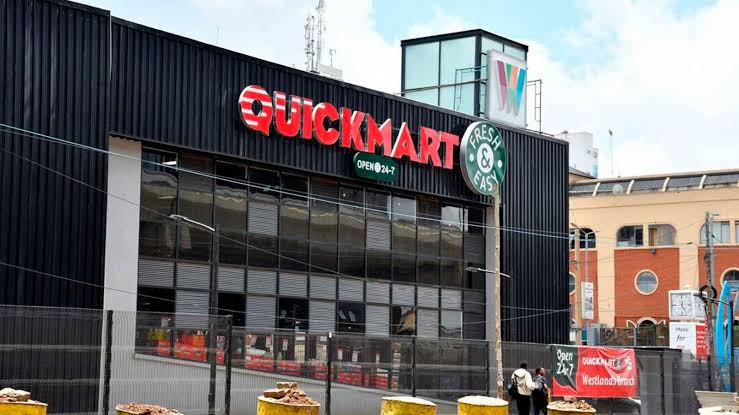
The Nairobi Securities Exchange (NSE). Photo/Handout
By Newsflash Writer
The Nairobi Securities Exchange (NSE) has gained Sh1 trillion in value within a year, climbing to a three-year peak as investors shift capital from bonds to equities due to declining returns on government securities.
The bourse’s total market capitalisation has risen to Sh2.62 trillion from Sh1.6 trillion a year earlier, with Sh518 billion added since June alone. This sharp rally—the fastest in under three months in recent history—has mirrored the steep fall in Treasury yields as the government moves to cut its debt-servicing costs.
Returns on short-term Treasury bills have dropped to between 8.01 and 9.58 percent, from 16 to 16.9 percent a year ago. The slide has redirected institutional and foreign funds into stocks, with blue-chip counters like Safaricom, KCB and Equity responsible for 84.7 percent of the Sh1.02 trillion gains over the past year.
Read more: Absa launch business credit card to boost financing for MSMEs
“The surge is mainly driven by the shift in interest rate outlook as the regulator loosens policy, and expectations that rates will continue trending downwards,” explained Ronnie Chokaa, senior analyst at Capital A Investment Bank. “Foreign and local investors are reallocating from cash and near-cash assets into riskier equities, which had been heavily undervalued before this year’s rally.”
Last week, the Central Bank of Kenya (CBK) reduced its policy lending rate by 25 basis points to 9.5 percent, marking the seventh consecutive cut. The bank noted that inflation remains within the target band, giving room to ease monetary conditions further. “The Committee concluded there was scope for additional easing to reinforce earlier measures aimed at stimulating private sector credit,” the CBK said.
Inflation ticked up slightly to 4.1 percent in July from 3.8 percent in June, but stayed well inside the CBK’s 2.5–7.5 percent range.
Corporate earnings fuel equities rally
The equities rally has also been underpinned by robust corporate earnings, especially from banks, attracting dividend-focused investors. The market’s resilience has grown despite enduring shocks in the last five years, including Covid-19, the Russia-Ukraine war, the Gaza conflict, Kenya’s 2022 election, youth-led protests last year, and US trade tariffs. “Investors have largely adjusted to these shocks, which are increasingly seen as the new normal,” Mr Chokaa added.
The 10 largest firms, accounting for 82.7 percent of the NSE’s total capitalisation, have driven most of the valuation surge. Safaricom, the biggest stock by market value, jumped 81.8 percent, adding Sh486.8 billion to hit Sh1.08 trillion, after its share price rose from Sh14.85 to Sh27. KCB, Standard Chartered Bank Kenya and Equity Group grew their valuations by Sh79.2 billion, Sh55.4 billion and Sh55.7 billion, reaching Sh175 billion, Sh127 billion and Sh206.6 billion respectively. Their share prices soared by 82.6, 77.3 and 37 percent, outpacing bonds, deposits and property returns. EABL’s market cap rose 37.1 percent (Sh44.2 billion) to Sh163.7 billion, NCBA climbed 66.7 percent (Sh42.8 billion) to Sh107 billion, while Absa grew 41.6 percent (Sh31.8 billion) to Sh108 billion.
Co-operative Bank’s value advanced 33.6 percent (Sh25.2 billion) to Sh100.3 billion, and BAT Kenya rose 26.2 percent (Sh9.1 billion) to Sh43.9 billion.
KenGen entered the top 10 with a 219.3 percent surge in value, from Sh15.37 billion to Sh49 billion. Smaller counters also posted stellar gains, with eight doubling in price since August 2024.
Read more: Gachagua reveals Ruto’s ‘business deals’ in Sudan, DRC, Serbia
East African Portland Cement jumped 765.4 percent to Sh58.50 per share, Sameer Africa climbed 547 percent to Sh14.75, and Kenya Power gained 491 percent to Sh11.35. These leaps dwarfed returns on government securities, where new bonds this year have offered coupons of 12–14.4 percent before tax.
Meanwhile, the secondary market value of an infrastructure bond issued in February 2024 at an 18.46 percent coupon rose to Sh120 per Sh100 unit, after touching Sh122 earlier in the year. The premium reflects strong appetite for the paper, even as new issuances yield far less.
In real estate, land prices in Nairobi’s suburbs and satellite towns grew 6.7 percent and 8.7 percent respectively in the year to June 2025, according to HassConsult. House sale prices climbed 7.8 percent over the same period. Fixed deposit accounts paid 8.37 percent interest in June, CBK data shows. Meanwhile, dollar deposits retained their value, with the exchange rate hovering around Sh129 per dollar for the past year.


About the Author