
Agriculture and Livestock Development Cabinet Secretary, Mutahi Kagwe. Photo/Newsflash
By Newsflash Reporter
Kenya and Iran have agreed to set up a joint committee that will work to remove trade barriers within the next 60 days, in a bid to lift the ban on Kenyan tea exports to the Middle Eastern country.
The breakthrough was announced during the 7th Session of the Kenya–Iran Joint Commission for Cooperation (JCC), held in Nairobi and co-chaired by Prime Cabinet Secretary Musalia Mudavadi and Iran’s Minister of Agricultural Jihad, Dr. Gholamreza Nouri Ghezalcheh.
The tea trade between the two countries was thrown into crisis following a criminal malpractice involving Kenyan firm Cup of Joe Limited.
Investigations revealed that the company imported low-grade tea, blended it locally, and re-exported it to Iran while fraudulently labelling it as premium Kenyan tea. The discovery sparked a diplomatic dispute and prompted Tehran to suspend all imports of Kenyan tea.
Read more:Kagwe demands 10% budget for agriculture
In response, the Tea Board of Kenya deregistered the company, with prosecution now pending. Agriculture and Livestock Development Cabinet Secretary Mutahi Kagwe said the two countries had agreed to implement stricter measures to protect the industry from similar incidents in future.
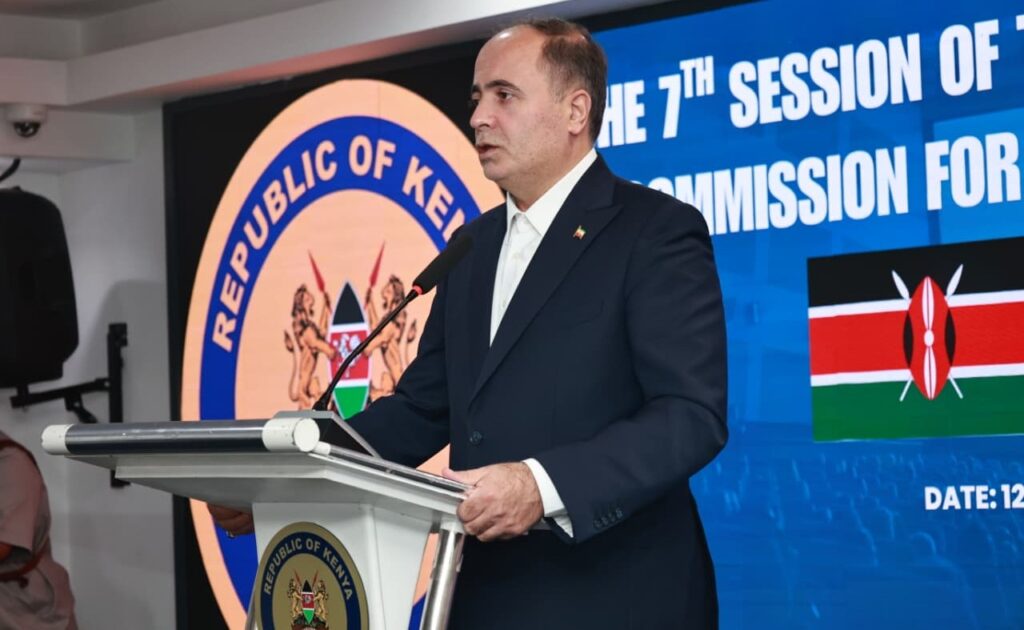
“Kenya’s tea sector is one of our largest foreign exchange earners, and we must protect it from unscrupulous traders who damage our reputation,” said Kagwe. “We are committed to restoring trust with our trading partners and ensuring only the highest quality tea leaves our shores.”
Significant losses for Kenya’s tea industry
According to official trade data, Kenya exported 12.4 million kilograms of tea to Iran in 2023, valued at KSh4.28 billion. This was a steep drop from 2022, when exports stood at 17.8 million kilograms worth KSh5.85 billion. The ban has inflicted significant financial losses on tea farmers and exporters, particularly in the tea-growing highlands of Kericho, Bomet, and Nyeri.
The joint committee will develop a detailed framework to guarantee compliance with quality standards, strengthen monitoring of exports, and rebuild confidence between the two nations. Both sides expressed optimism that tea exports could resume before the 60-day deadline expires.
Read more: High Court halts State’s 500,000-tonne rice import plan
“Iran is an important and loyal customer of Kenyan tea,” Dr. Nouri Ghezalcheh said. “This committee will ensure we put in place a transparent, reliable, and corruption-free system for trade.”

If the process stays on track, industry players believe that the restored trade will help stabilise prices and inject much-needed income into Kenya’s struggling tea sector.


About the Author