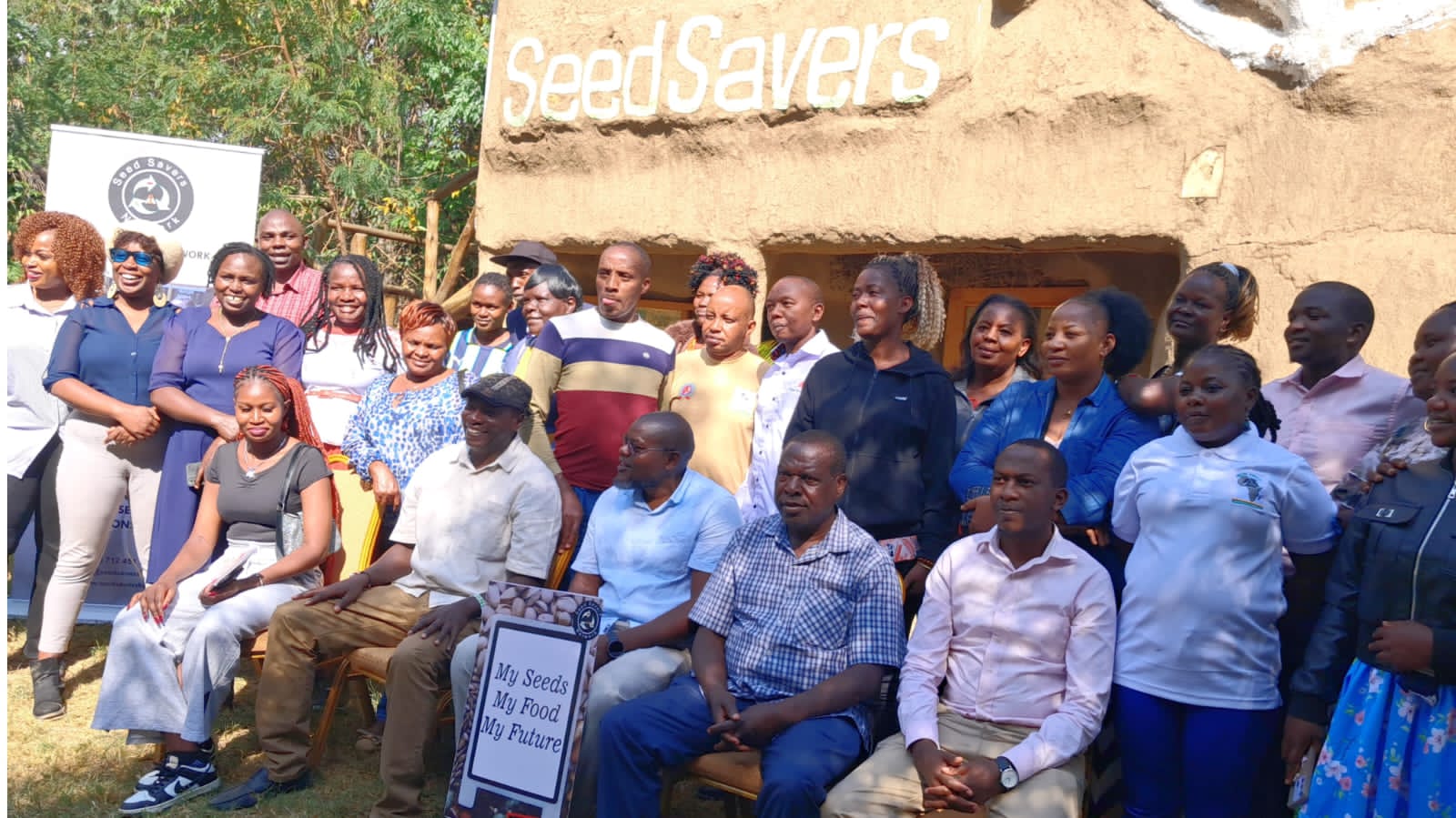
Farmers from across the nation and Stake holders posing for a photo during the review of SPVA in Gilgil. Photo/Cecilia Muthoni
By Ruth Nganga
Smallholder farmers across Kenya are poised to gain unprecedented recognition and protection under proposed reforms to the country’s seed laws, marking what stakeholders describe as a major milestone in the quest for food security, biodiversity conservation and farmers’ rights.
The anticipated changes emerged during a national workshop convened by the Seed Savers Network in Gilgil on June 12, 2026, where farmers from different counties met to review proposed amendments to the Seed and Plant Varieties Act (SPVA) ahead of public participation on the draft Seeds and Varieties Bill.
For years, Kenya’s formal seed sector has largely shaped policy discussions, while farmer-managed seed systems, which provide nearly 80 per cent of the seeds used by smallholder farmers, have remained largely unrecognised and, in some instances, criminalized.
Seed Savers Network Director Daniel Wanjama said the workshop was designed to equip farmers with the knowledge needed to actively participate in shaping the future of the country’s seed sector.
“We have invited farmers from all counties to discuss the making of a new law for the seed sector. After days of intensive discussions, we now see a very good level of awareness and understanding of the problems facing current seed laws,” said Wanjama.
The discussions build on a landmark High Court ruling delivered on November 27, 2025, which declared several provisions of the existing Act unconstitutional and opened the door for more inclusive legislation that recognises the critical role played by farmer-managed seed systems.
Recognising farmers as custodians of seed diversity
According to Wanjama, the proposed legislation seeks to align Kenya’s seed laws with constitutional provisions by formally recognizing farmers’ rights to save, use, exchange and sell their seeds.
The draft Bill also seeks to protect farmers from seed piracy and ensure benefit-sharing whenever genetic resources conserved by communities are used for commercial purposes.
Read more: Cotton farming gains momentum in Lamu County
He noted that Kenya currently has more than 124 community seed banks that could be strengthened significantly if the proposed reforms become law.
“The new law is intended to place farmers at the centre of the seed sector while protecting the rich genetic resources they have preserved over generations,” he said.
The workshop followed nationwide stakeholder consultations on the draft Bill and aimed to deepen farmers’ understanding of the proposed amendments before the public participation phase begins.
Boost for food security and climate resilience
Government officials and agricultural experts attending the forum welcomed the proposed integration of farmer-managed seed systems into Kenya’s legal framework.
Dr. Nyamongo Desterio, Director of the Genetic Resources Research Institute (GeRRI) under the Kenya Agricultural and Livestock Research Organization (KALRO), said the government remains committed to supporting the informal seed sector because of its significant contribution to national food production.
“The government has developed a revised national seed policy. We are here to strengthen the proposed farmer-managed seed system framework to ensure seeds are available, of high quality and capable of improving production while conserving biodiversity and supporting food security,” said Dr. Nyamongo.
Dr. Martin Oulu, Vice Chair of the Inter-sectoral Forum on Agrobiodiversity and Agroecology (ISFAA) and Managing Director of Inscape Research and Consulting, described the reforms as a positive step toward creating a more inclusive seed system.
Read more: Gathungu backs coffee boost for Nyandarua farmers
He said the draft legislation seeks to guarantee seed quality using approaches already familiar to farming communities while opening market opportunities for small-scale seed traders and community seed banks.
“Indigenous seeds supply almost 80 per cent of the seeds used by our farmers. This plays a critical role in food and nutrition security,” said Dr. Oulu.
For many farmers, the review process represents a shift from being viewed merely as seed users to being recognised as knowledge holders and custodians of agricultural biodiversity.
Among those attending the workshop was Kilifi farmer Lulu Laini, who said the discussions helped her better understand the proposed law and the rights it seeks to protect.
Stakeholders say integrating farmer-managed seed systems into national legislation could reduce dependence on costly commercial seeds, strengthen food security and preserve climate-resilient crop varieties developed and maintained by farming communities over generations.
As the Bill advances to public participation and eventual debate in Parliament, Wanjama urged lawmakers to back the proposed reforms and ensure farmers’ interests remain at the heart of Kenya’s future seed policy.


About the Author