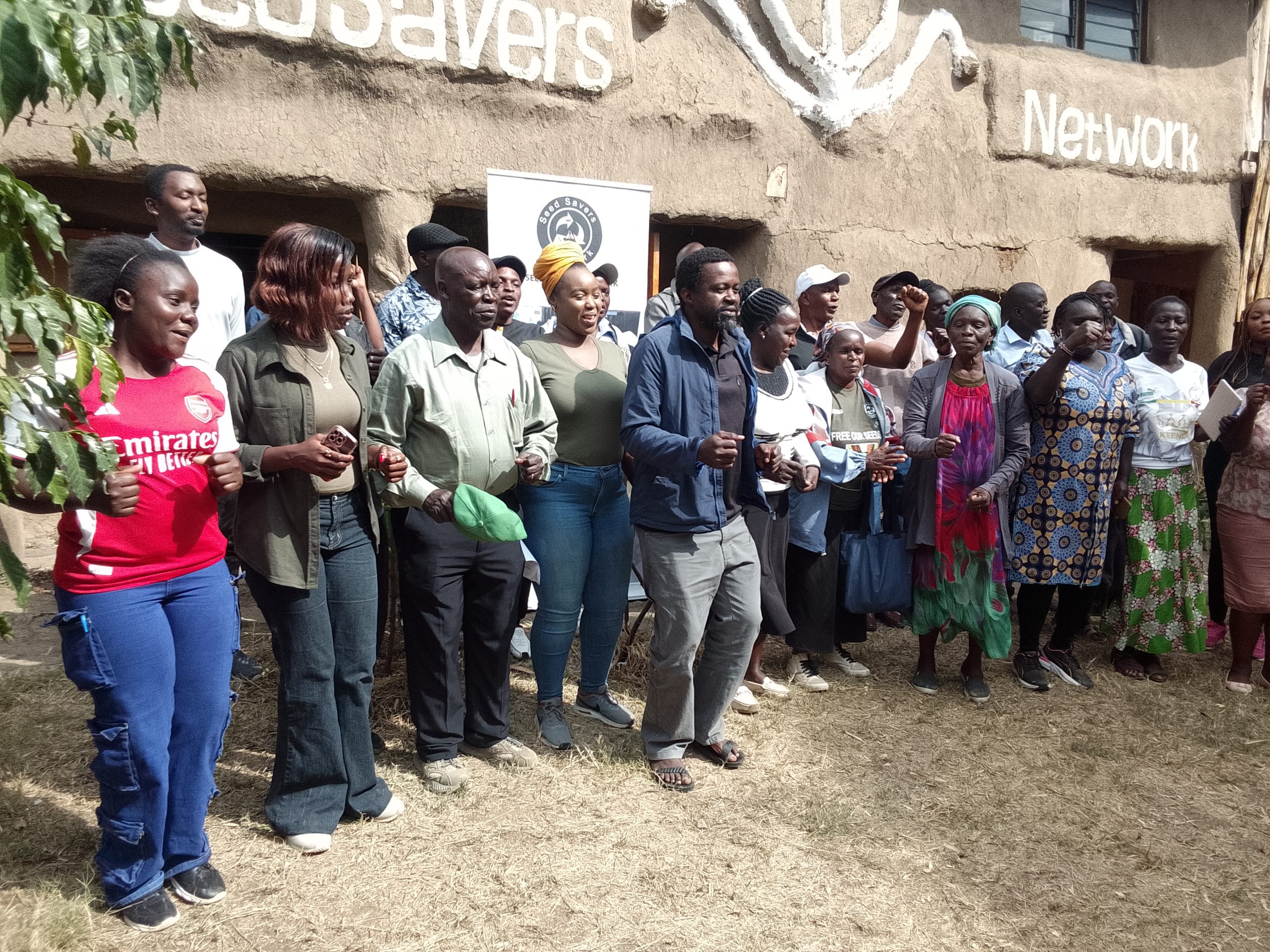
Stakeholders in unity at Seed Savers Network in Gilgil during the workshop. Photo/Ruth Ng'ang'a
By Ruth Ng’ang’a
Stakeholders in the agriculture sector, rights activists and urban advocates gathered at the Seed Savers Network (SSN) in Gilgil for a two-day workshop from July 20–21, 2026, to craft a joint strategy aimed at building a powerful social justice movement that bridges rural and urban struggles for food sovereignty and indigenous seed rights.
The workshop brought together participants from farming communities, civil society organisations and development partners to deliberate on how rural movements focused on food sovereignty can unite with urban movements advocating for broader human rights.
The stakeholders emphasised that food and seed rights are fundamental human rights and underscored the importance of coordinated action in influencing ongoing national policy processes.
Tabitha Munyiri, Communication and Advocacy Officer at Seed Savers Network, said most farmers working with SSN are part of the rural food sovereignty movement, while acknowledging that there are also strong urban movements championing diverse rights.
“I hope we can come together as rural and urban movements so we can share successes and achieve one goal,” said Tabitha.
Call for united action
Sefu Sanni, from the Kenya Left Alliance and the Pan Africa Women’s Network (Black Feminist), stressed that food sovereignty is a human rights issue, particularly when it comes to indigenous seeds.
The stakeholders developed a two-year strategy focusing on public participation in policymaking, protecting smallholder farmers who feed the nation and amplifying the role of women and youth in agriculture.
“Women and youth are the manpower in agriculture and that is the reason we fight for their rights,” said Sefu.
Read more:Relief to Miraa farmers as govt increase prices
She also raised concerns that some provisions in existing laws criminalise seed sharing among farmers and impose certification requirements that threaten indigenous seeds, which she described as part of the people’s heritage, culture and history.
Sylvanus Kasiti, from the Kenyan Peasants League, an organisation representing indigenous smallholder farmers, urged a return to traditional farming practices, saying they are more affordable and better suited to addressing climate change.
“I would urge farmers to venture into indigenous farming because it is cheap and affordable, especially when we focus on climate change because indigenous seeds are resilient,” he said.
Gerald Kamau, one of the youth participants, said consumers are directly affected by chemical residues and pesticides in food, as well as monopolies in the seed industry that disadvantage smallholder farmers.
He noted that urban populations are consumers and therefore have a shared interest in supporting the movement for seed sovereignty.
Plans for regional collaboration
Francis Ngiri, an agroecology farmer from Nakuru, called for the elimination of middlemen to enable farmers to access markets directly.
“We all have a right to clean and healthy food,” he said.
The workshop concluded with plans for coordinated public participation, engagement with county governments to strengthen grassroots mobilisation and preparations for a side event at the upcoming 1st Eastern Africa Indigenous Seed Conference in November 2026.
Read more: Macadamia farmers back govt policy amid price drop concerns
Participants agreed that urban and rural struggles are inseparable and that a unified voice is needed to shape policies that respond to the needs of smallholder farmers rather than undermine them.
The strategy developed in Gilgil is expected to serve as a pilot for broader collaboration across Eastern Africa, positioning the November conference as a platform to showcase early successes in advancing seed sovereignty and social justice.


About the Author