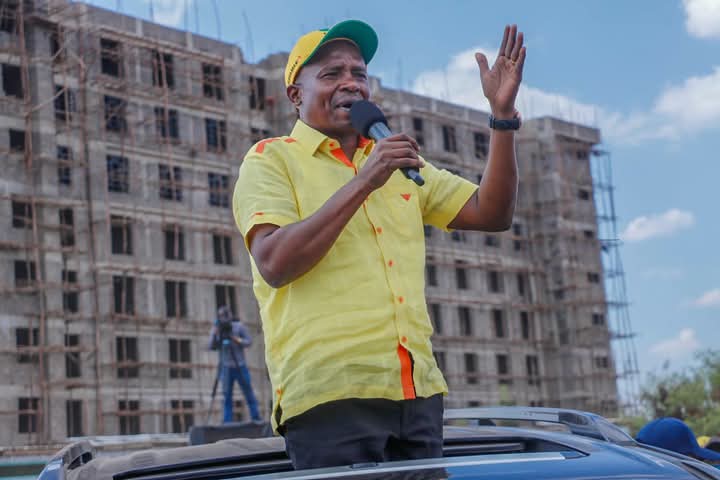
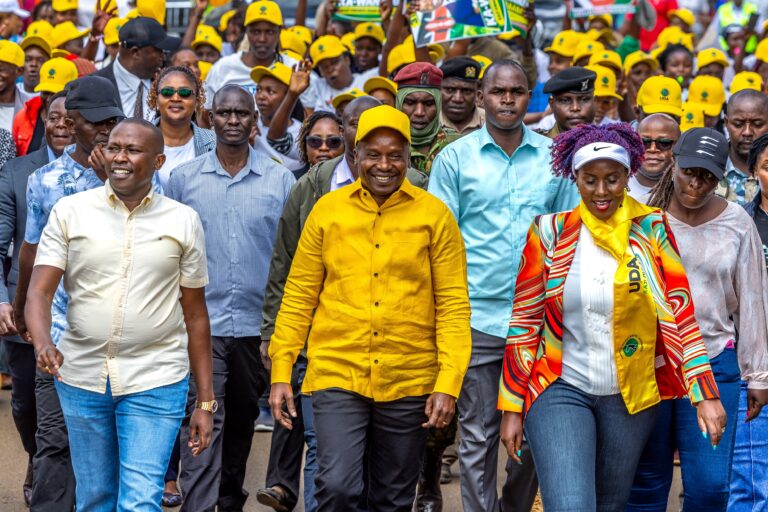
Gachagua interacts with Githurai residents during rally. Photo/Courtesy
NAIROBI, Kenya – Former Deputy President Rigathi Gachagua has unveiled a presidential platform centered on tackling Kenya’s mounting public debt and reviving the economy, marking a significant departure from traditional campaign promises. The announcement comes just one day after he officially launched his bid for the presidency.
Speaking to supporters and media, Gachagua directly addressed critics who claimed he lacked a clear agenda, insisting that restoring the nation’s financial health would be his absolute priority if elected. The former deputy president positioned himself as a pragmatic leader willing to make difficult decisions rather than offer popular but unsustainable pledges.
Debt Crisis Takes Center Stage
Gachagua framed Kenya’s KSh 12 trillion debt burden as the most critical issue facing the nation, arguing that it requires immediate and focused attention before any new development projects can be considered. His approach represents a stark contrast to the infrastructure-focused campaigns that have dominated Kenyan politics in recent election cycles.
“I will not stand before Kenyans and lie that I will build roads when the country is buried under a debt of 12 trillion shillings,” Gachagua stated. “My focus is to properly restore the state of our nation. We must first address this debt crisis before we can promise new projects.”
Housing Levy Reversal and Policy Shifts
In one of his most specific policy announcements, Gachagua pledged to immediately scrap the controversial housing levy introduced by the current administration. The levy has faced significant public criticism and legal challenges since its implementation.
“On my first day in office, I will scrap the housing levy and hand over all those houses to county governments,” he declared. “They will collect rent and compensate all those whose money was unfairly deducted.”
This proposal would represent a fundamental restructuring of one of President William Ruto’s signature initiatives. Gachagua framed the move as part of a broader effort to reverse policies he believes have burdened ordinary Kenyans while failing to deliver promised benefits.
Read More: Businessman Buzeki joins UDA, pledges support for President Ruto
Invoking the Kibaki Legacy
Gachagua strategically invoked the legacy of the late President Mwai Kibaki, drawing parallels between his own approach and Kibaki’s economic management style. He specifically noted Kibaki’s academic credentials from Makerere University and the London School of Economics while emphasizing that humility and effective leadership mattered more than educational pedigree.
The comparison appeared to be a direct response to President Ruto’s previous comments about Gachagua’s education and leadership abilities. By aligning himself with Kibaki’s economically successful presidency, Gachagua attempted to reframe the conversation around practical results rather than personal background.
Criticism of Current Administration
The former deputy president offered sharp criticism of the administration he once helped lead, accusing it of presiding over numerous failures during its three years in power. His allegations covered multiple sectors and included serious governance concerns.
“In three years, what have we seen? Abductions, extra-judicial killings, theft of public resources, destruction of the health and education systems, and gangs harassing women,” Gachagua claimed. “That, to him, is the benefit of education.”
This comprehensive critique marks a significant escalation in his opposition to the government and suggests a complete break from his previous role as deputy president. The comments reflect the deepening divisions within Kenya’s political leadership as the country moves toward another election cycle.
Read More: Chaos at Kisii funeral as MPs Kibagendi, Nyakundi exchange blows
Economic Recovery Framework
While Gachagua’s speech focused heavily on criticizing current policies, it also outlined a broader framework for economic recovery centered on debt management and fiscal responsibility. His approach suggests a conservative fiscal policy that would prioritize reducing Kenya’s debt burden over new spending initiatives.
The former deputy president’s emphasis on economic fundamentals rather than flashy development projects represents an attempt to connect with voters concerned about the country’s financial stability and the rising cost of living. This strategy may particularly appeal to urban voters and business communities worried about Kenya’s debt sustainability.
As the campaign season progresses, Gachagua’s debt-focused platform is likely to spark vigorous debate about economic priorities and the trade-offs between immediate development needs and long-term financial stability.


About the Author