BIC East Africa company team pose for a group photo with Mathare North Primary School students during the launch of the National Environmental tree planting initiative at Mathare North Primary school, Nairobi on May 30, 2025. Photo/Handout
By Muthoni Wainaina
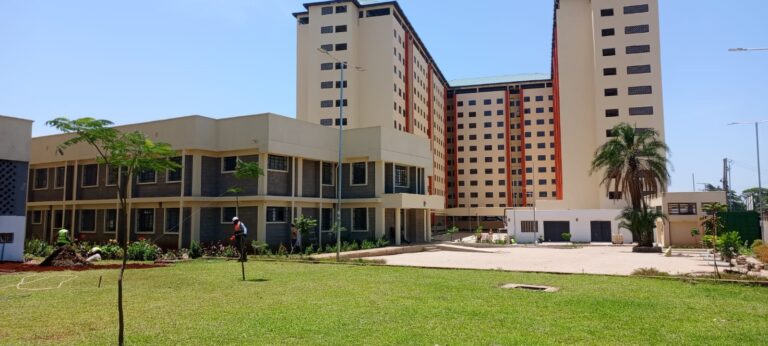
BIC East Africa has unveiled a nationwide environmental and economic empowerment initiative, launching the first phase at Mathare North Primary School in Nairobi.
The program aims to plant 1,650 fruit trees across 22 primary schools in Kenya, linking environmental sustainability with income generation for educational institutions.
The launch coincides with the 75th anniversary of the iconic BIC Cristal ballpoint pen, a product that revolutionized access to writing tools worldwide.
The initiative, dubbed the Environmental Legacy Initiative, is being implemented in partnership with Fruity Schools Africa and seeks to plant 75 fruit trees in each participating school.
Speaking during the event, BIC East Africa General Manager Paloma Lengema emphasized the importance of aligning environmental action with the company’s heritage.
“We are marking a major milestone with the 75th anniversary of the BIC Cristal pen, which played a transformative role in education by making writing accessible and affordable,” Lengema explained.
“Before the BIC Cristal, pens were expensive and inaccessible to most students. Its introduction allowed every pupil to own a pen and express themselves freely.”
Lengema noted that the tree-planting initiative carries a similar spirit of accessibility and empowerment.
“Each fruit tree we plant will produce around 400 fruits per year. These can be consumed by the children or sold by the school, potentially generating income that supports education. It is a chance to beautify learning environments, reduce carbon emissions, and give back to communities,” she said.
A greener future for schools
BIC estimates that, once fully matured, the trees will collectively sequester over 41 tons of carbon dioxide each year while generating up to KSh 6.6 million in potential annual revenue.
Education stakeholders welcomed the initiative with enthusiasm. National Chairman of the Kenya Primary School Head Teachers’ Association (KEPSHA), Fuad Abdalla Ali, praised the company for its leadership and called for broader collaboration.

“We are grateful to BIC for choosing to celebrate their anniversary in such a meaningful way,” he said.
“Though the initiative currently covers 22 schools, our hope is that it expands to all 47 counties. If more stakeholders adopt this model, we can transform not only our schools but also our communities.”
Read more: Kenya Forgotten Schools: Education in arid regions
Ali proposed that every pupil be encouraged to plant trees both at school and at home.
“If each child plants two fruit trees in school and another two at home, and involves their siblings as well, we would significantly increase our national tree cover while teaching environmental responsibility,” he added.
The Ministry of Education echoed the sentiments, with Muyaku Indimuli, Deputy Sub-County Director of Education for Kasarani, commending the program’s dual focus on nutrition and sustainability.
“This project brings hope to schools. These are not just trees; they are sources of nourishment and future income. Even a missed lunch might be offset by a fruit from a tree planted today,” Indimuli said.
She urged BIC to scale up this effort and inspire similar initiatives nationwide.
The initiative serves as a model for integrating education, environmental stewardship, and economic development—creating lasting value for schools and communities across Kenya.


About the Author