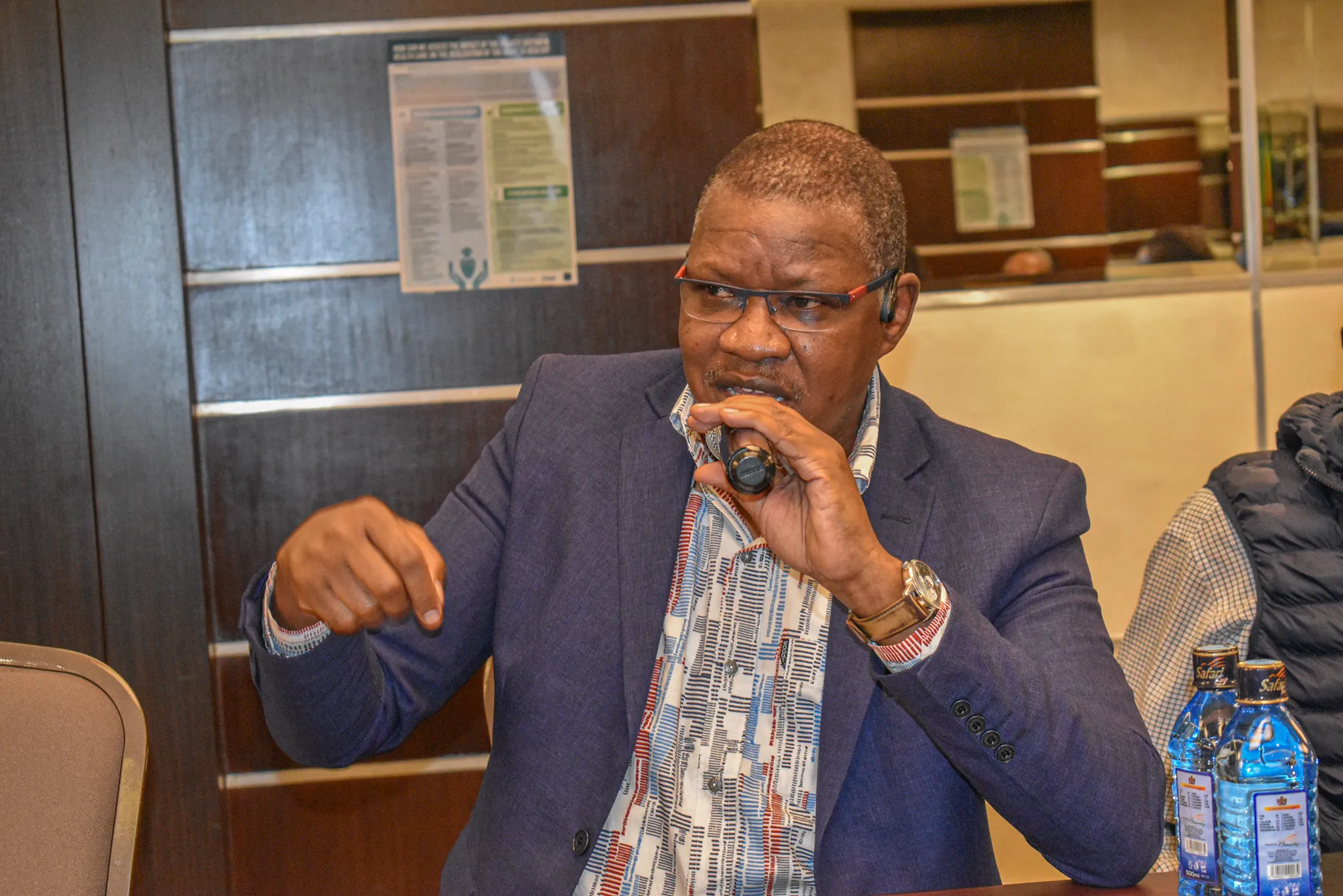
Mr Boaz Waruku, Policy and Strategy Advisor at Elimu Bora Working Group. Photo/Handout
By Lawrence Ongaro
The government has been blamed for the anxiety currently being witnessed in the registration of students into Grade 10.
The situation has resulted in about 700,000 Grade 9 students failing to transition to Grade 10 as of last week.
Policy and Strategy Advisor for the Elimu Bora Working Group, Mr Boaz Waruku, said the problem stems from the government’s failure to give parents adequate guidance early enough to enable them to prepare in advance.
He said that at the moment, many parents have not completed payment of school fees, there are challenges related to transferring students to different schools, and cases of improper student registration.
The Munavu Report on placing students in national schools at regional and county levels also created some confusion.
“That plan caused many students to end up in lower-category schools (C1 and C2),” Mr Waruku explained.
Confusion over school categorisation
The 2023 Education Report introduced several changes under PWPER by categorising schools into three groups.
Professor Raphael Munavu’s report recommended a three-tier system (STEM), comprising Social Sciences, Arts, and Sports Science.
However, the Ministry of Education has currently established four categories: C1, C2, C3, and C4.
Read more:Parents left stranded by Grade 10 new placement rules
Category C4 consists of day schools, most of which lack specialised facilities and adequate infrastructure.
Studies conducted have revealed that only 61 per cent of students had reported back to school this 2026 term.
Stakeholders call for urgent reforms
According to Mount Kenya University Pro-Chancellor Dr Vincent Gaitho, competency-based education (CBE) is not a programme that was developed hastily. However, he noted that many students are being forced to join day schools instead of their preferred national schools, despite Kenya having attained independence 63 years ago.
“It is important to prepare adequately for students joining the CBE system for the first time, so that we can determine their fate in 2029 when they transition to universities,” Dr Gaitho said.
Read more:Gov’t extends Grade 10 reporting to Wednesday, January 21
He challenged Cabinet ministers to take full responsibility for their dockets instead of leaving all the burden to the President over issues occurring in different ministries.
He noted that although students sit examinations together, some fail due to lack of essential facilities, teachers, infrastructure, and especially laboratories.
“Some students are left in awe when they see facilities such as swimming pools and computers,” he said.
‘Challenges began in 2016’
Former nominated MP and one-time Kenya National Union of Teachers (KNUT) Secretary-General, Mr Wilson Sossion, said the challenges being experienced began emerging in 2016, when many decisions were made without a clear framework.
He said KNUT issued a special report warning against the scrapping of basic education.
“Many teachers were not prepared for the CBC system after the government admitted mistakes, saying it was an ongoing programme,” he said.
He proposed that more schools be built and that the use of NG-CDF funds be scrutinised.
Read more:How to check Grade 10 placement for 2025 KJSEA candidates
Mr Yusuf Chanzu said several government agencies are not functioning properly, yet about 700,000 students have failed to report to school.
He questioned what action the Teachers Service Commission (TSC) is taking to resolve the matter.
He advised the government to invest heavily in education and to give parents proper guidance on the education system as a whole.
The stakeholders made these observations during an interview at a local television station.



About the Author