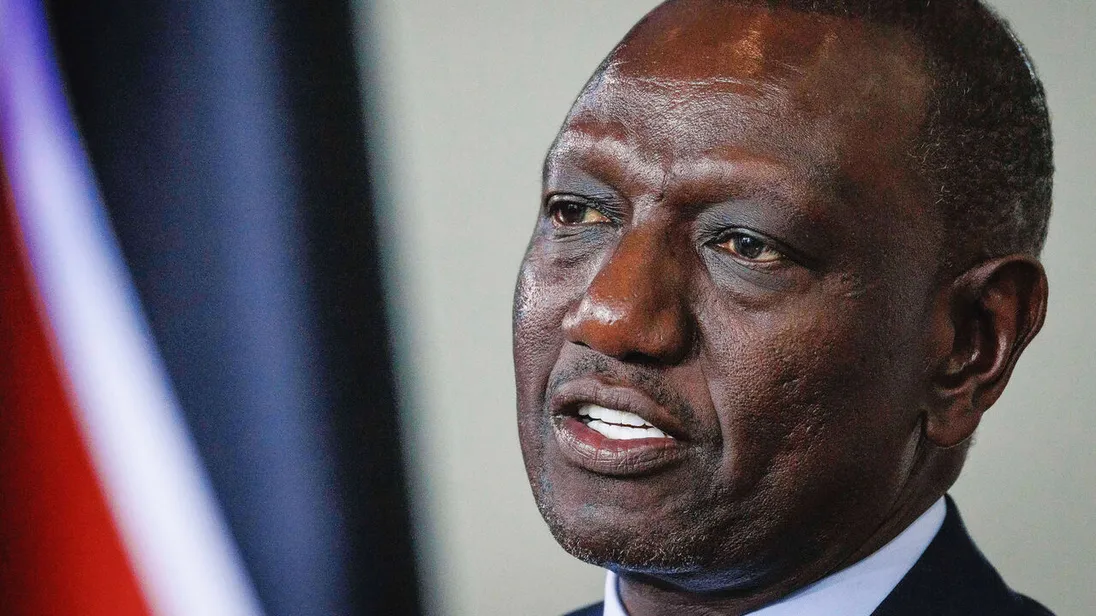
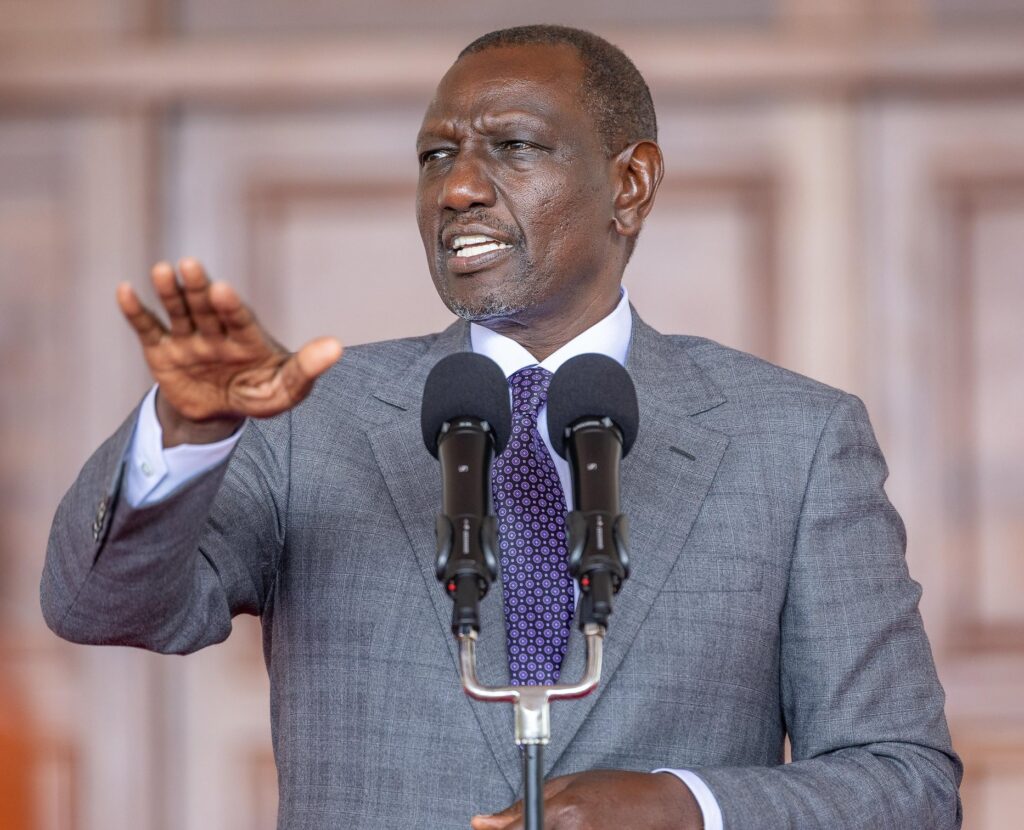
President William Ruto. Photo/Handout
By Newsflash Reporter
President William Ruto’s directive to security forces to shoot protesters in the legs marks a troubling shift in tone and governance style for a man who once portrayed himself as a humble, God-fearing “hustler” on a mission to uplift Kenya’s downtrodden.
His statement, delivered on Wednesday, July 9, 2025, amid the deadly Saba Saba protests, has been interpreted by many as the clearest signal yet that the president is no longer governing through consensus or compassion — but through coercion, fear, and fury.
Once seen as a political outsider who rose from humble beginnings to the country’s highest office, Ruto is now being compared by critics to the late President Daniel Arap Moi, under whom he was politically mentored during the notorious YK’92 era. But in the eyes of many, Ruto has gone a step further — becoming more authoritarian than the man who shaped him.
From ‘hustler’ to hardliner
During the 2022 presidential campaign, Ruto built his brand on the promise of hope and inclusion. Branding himself a “hustler,” he appealed to millions of jobless youth and struggling small-scale traders. He openly aligned himself with the church, often quoting scripture and even breaking down in prayer at campaign events.
“I am a testimony that God lifts the lowly,” Ruto emotionally declared during a church service in Nairobi in 2022, a message that resonated deeply with his base, especially in Mt Kenya.
The Mt Kenya region, traditionally skeptical of outsiders, overwhelmingly backed Ruto against their own — then-President Uhuru Kenyatta’s preferred successor, Raila Odinga.
Read more: Ruto backs Murkomen’s shoot-on-sight order to police
It was a historic realignment: Kikuyus, long known for voting for their own (Matiba and Kibaki in 1992, Kibaki in 1997 and 2007, and Uhuru in 2013 and 2017), threw their weight behind Ruto, helping him secure 47% of his total votes from the region.
Key Mt Kenya figures like Rigathi Gachagua, Kimani Ichung’wa, Ndindi Nyoro, Alice Wahome, and Moses Kuria played pivotal roles in mobilizing the region under the “Hatupangwingwi” (We will not be directed) movement, rebelling against Uhuru’s command and backing Ruto.
But two years later, the same region has become politically volatile, disillusioned, and increasingly vocal in its regret. The dream sold during the campaign has soured into resentment and resistance, with political analysts pointing to Ruto’s centralized control and retaliatory governance style.
Broken alliances
Nowhere is Ruto’s transformation more evident than in the chaos engulfing Mt Kenya. The dramatic impeachment of former Deputy President Rigathi Gachagua in October 2024 has split the region down the middle, with MPs allied to Ruto and those loyal to Gachagua engaging in public spats and finger-pointing.
Ruto is accused of attempting to divide the region further into Mt Kenya East and Mt Kenya West blocs — a move perceived as a divide-and-rule strategy designed to neutralize resistance. But the fallout has only deepened the political crisis, emboldening critics who see Ruto’s leadership as increasingly intolerant and unstable.
“What we are seeing is not leadership. It is vengeance disguised as governance,” said political analyst Mwangi Gicheha. “Has Ruto forgotten the commitment he gave to Kenyans? That he would be different? That he would listen?”
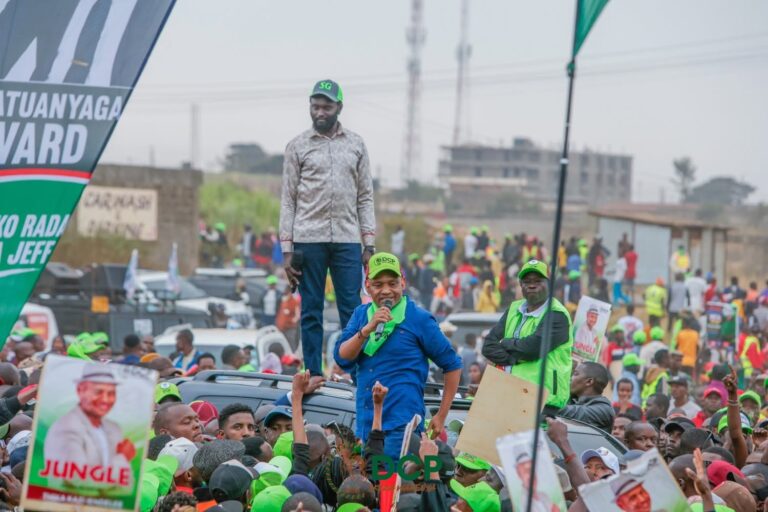
The recent Saba Saba protests, initially sparked by economic grievances and rising authoritarianism, turned violent, with over 30 confirmed deaths and widespread destruction of property. Ruto’s response — authorizing police to use live bullets on protesters who approach police stations — has drawn condemnation from civil rights groups, clergy, and the international community.
“It is one thing to restore order,” Gicheha added. “It is another to command the use of potentially lethal force against your own people, many of whom voted for you.”
The ultimate irony
The most jarring irony is that in 2022, Ruto himself accused then-President Uhuru Kenyatta of contemplating harm against his children. “If you want to kill me, do it. But leave my children out of it,” Ruto said at a rally in Eldoret. It was a poignant, emotional appeal that cemented his image as a victim of political persecution.
Today, the same man stands accused of directing deadly violence against civilians — many of them young, poor, and jobless — for protesting economic hardship and political betrayal.
The evolution from “God’s chosen hustler” to an angry president issuing shoot-to-injure orders has shocked even some of his closest former allies.
Read more:Outrage over Murkomen’s shoot-to-kill order to police
Human rights groups have already recorded more than 31 deaths linked to the protests, and video footage of police brutality — including in Mt Kenya towns like Nyeri, Kirinyaga, and Embu — has sparked outrage.
Ruto’s defenders argue that he is dealing with a security crisis instigated by anarchists and economic saboteurs. They point to the looting of businesses and attacks on police stations. However, even some government insiders worry that the president’s anger has clouded his judgment.
“The line between firmness and cruelty is thin,” a senior government official told Newsflash on condition of anonymity. “The president’s tone has changed. He’s not listening anymore.”
From Messiah to menace
According to political analysts, Ruto’s presidency began with hope, especially for millions who saw in him a fellow struggler — someone who had walked their path and would fight for them.
But two years in, the anger of the president has eclipsed the promise of the hustler.
What remains is a country at odds with itself, and a president increasingly isolated by the very people who lifted him into power.
Read more: Straight-shooting activist scares away MPs in TV show
As the country continues to reel from the political tremors of the past few weeks, one question looms large in the national psyche: Will the real William Ruto please stand up? Is he the compassionate, God-fearing hustler he once claimed to be — or a ruler consumed by power and rage?
As political analyst Gicheha notes, “A president who turns his gun on the people is not defending the state. He is declaring war on the nation.”


About the Author