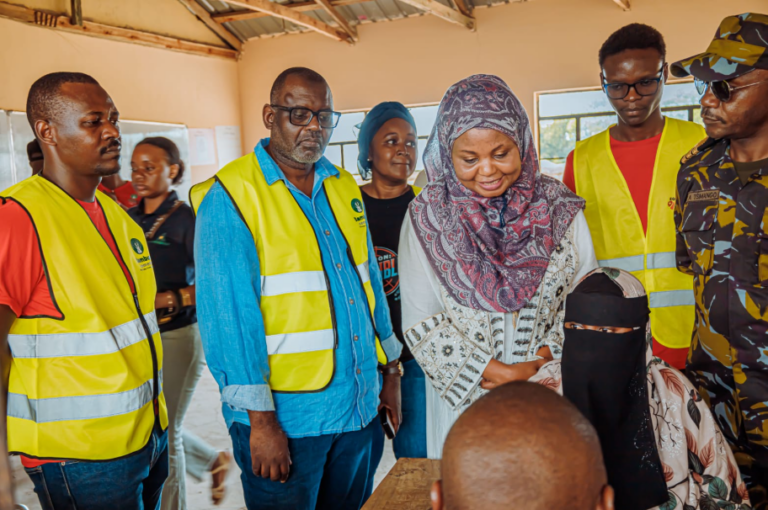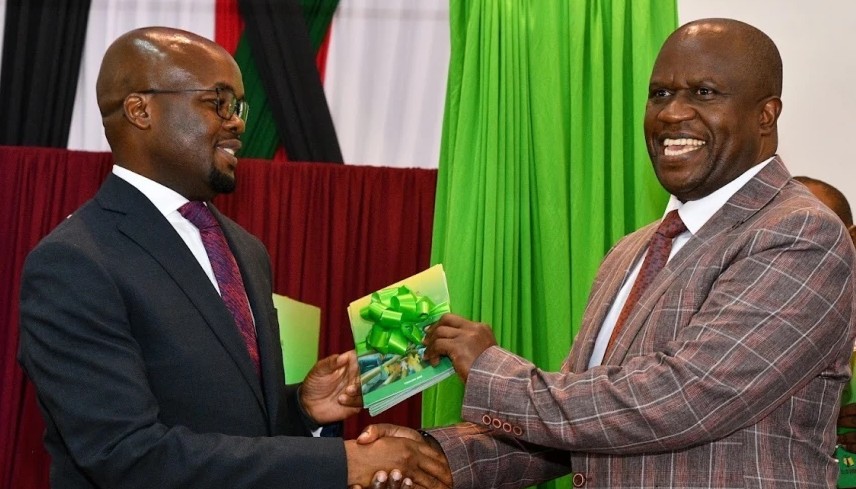
Interior Principal Secretary Raymond Omollo and NACADA Board Chair Stephen Mairori presided over the launch of the Community-Based Rehabilitation Framework for Substance Use Disorders (SUDs). Photo/Citizen Digital
By Daisy Okiring
The Kenyan government has launched a new nationwide framework aimed at addressing the escalating drug addiction crisis through a community-centered approach that emphasizes prevention, rehabilitation, and reintegration.
The strategy, known as the Community-Based Rehabilitation Framework for Substance Use Disorders (SUDs), was unveiled by the National Authority for the Campaign Against Alcohol and Drug Abuse (NACADA) at the Kenya Institute of Curriculum Development (KICD) in Nairobi on Thursday, 24 April, 2025.
Speaking during the launch, Interior Principal Secretary Raymond Omollo said substance abuse is no longer just a public health issue, but a significant national security threat. He cited its links to rising crime rates, domestic violence, radicalization among youth, and overcrowding in correctional facilities.
Dr Omollo stressed that Kenya cannot rely solely on policing to solve the addiction crisis and must instead confront its root causes through coordinated community action. He pointed to the destructive impact of illicit alcohol and narcotics, particularly in rural areas, which has led to the breakdown of families and social structures.
The new framework was developed in collaboration with government agencies, healthcare professionals, and civil society organizations. It aims to shift the country’s approach from punitive measures to solutions rooted in public health and social support.
Read more:Kenyan public hospitals: The new death traps for patients
NACADA Chief Executive Officer (CEO) Anthony Omerikwa said the framework focuses on evidence-based practices such as early detection, enhanced referral systems, and stigma reduction to ensure that individuals struggling with addiction receive timely and effective support. He called on all stakeholders, including local leaders and community members, to take active roles in its implementation.
Omollo added that the government expects the program to be rolled out swiftly across the country, stressing that all regions, from urban centers to remote areas, must benefit equally.


About the Author