
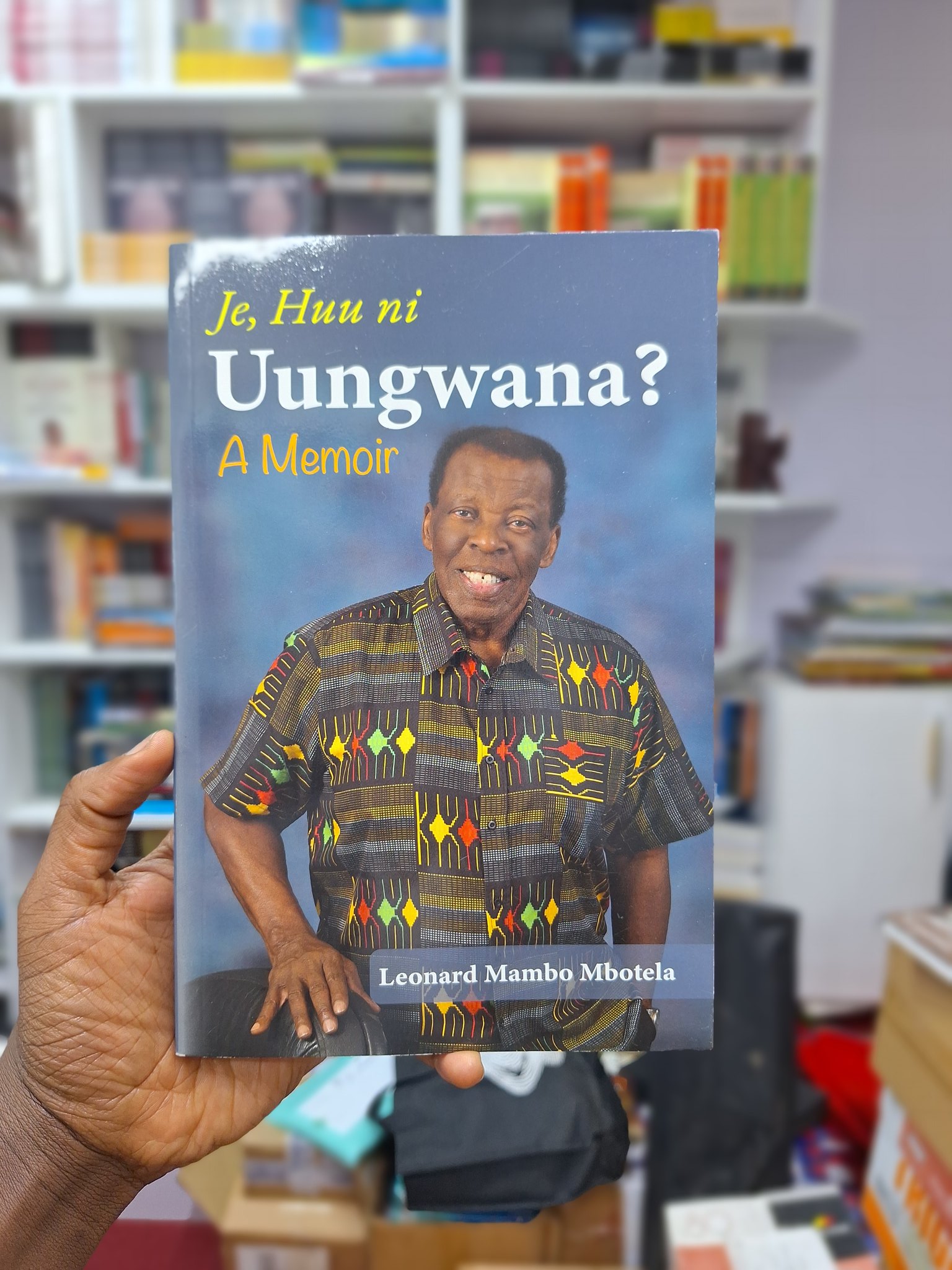
Leonard Mambo Mbotela's autobiography; 'Je, Huu ni Uungwana?: A Memoir'. Photo/Textbook Centre
Leonard Mambo Mbotela shaped Kenya’s journalism. Mbotela imbibed the journalism bug in me since my childhood – then as a village boy grazing cows and goats in Kieni village – one of the remotest parts of Nyandarua County.
His Je, Huu ni Uungwana? program in KBC Idhaa ya Taifa aired from 12.30 p.m – 1.00 p.m on Sundays. For villagers, those who afforded TVs were in their own class. They were rich. Only a few homesteads of teachers had red Greatwall TV sets. And they were black and white. Moreover, there were specific days when the TVs were on, as most of the time, the Chloride Exide battery (ies) used to power the TVs were at a local shopping centre for charging.
Most villagers relied on radios. I had a second-hand Sanyo AM/SW pocket radio, which I had bought after working as a casual labourer for several days at a rich neighbour’s farm.
On Sundays, when I was alone in the grazing fields, Leonard Mambo’s program kept me glued to my valued pocket radio (which was then one of the most treasured assets for a normal village boy).
His program would be interrupted by craftly created Eveready Paka Power adverts: “Betri za Eveready ni nguvu ya kudumu!” In most afternoons, he would team up with veteran broadcasters like Jack Oyoo Sylvester, (the late) Peter Kimeu, Ali Salim Manga, and Said Ali Matano to air the local Kenya Premier League matches.
Mbotela was an all-rounded journalist who could air his own program, host an entire radio show, commentate on local and international football matches, and read news. He did all this smoothly and effortlessly for over five decades without getting bored or distracted. He nurtured generations and generations of journalists.
To sum it all up, he documented his journey in a book Je, Huu ni Uungwana?: A Memoir.
A great lesson from his life is: It’s not the riches that we leave behind that immortalise us, but the memories we leave to the generations we nurtured.
With his book, Mbotela’s memories will live with us. Like the ancient Greek philosophers whom we read about to date, Leonard Mambo Mbotela’s name will be etched in our memories for centuries to come.


About the Author


