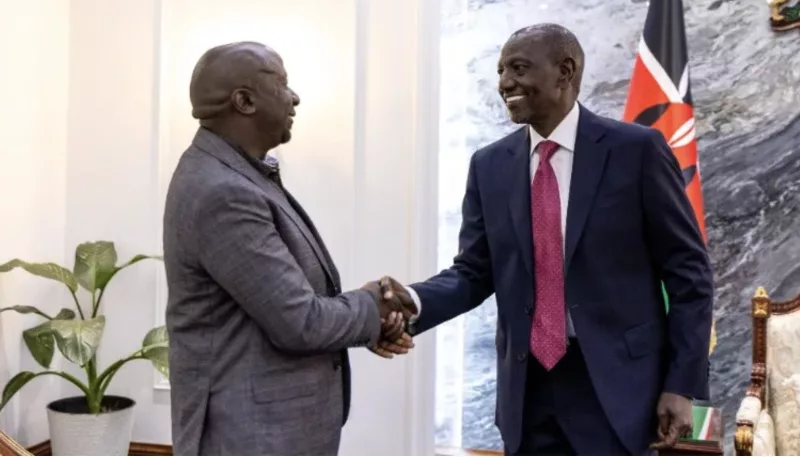
President William Ruto and Samuel Muchina at State House, Nairobi. Photo/Sate House
By Newsflash Writer
President William Ruto has appointed Samuel Muchina Nyaga, the UDA candidate in the recently concluded Ol Kalou parliamentary by-election, as a member of the Nairobi Rivers Commission.
The appointment comes barely a day after Muchina met President Ruto at State House, Nairobi, on Tuesday, July 21.
His appointment follows the revocation of the earlier appointment of Amos Chege Mugo.
Newsflash had earlier exclusively reported that Muchina was being considered for a State appointment following his unsuccessful bid for the Ol Kalou parliamentary seat.
According to Gazette Notice No. 11217, President Ruto appointed Muchina to the Nairobi Rivers Commission under Gazette Notice No. 13907 of 2024, read together with Section 51(1) of the Interpretation and General Provisions Act.
“It is notified for the general information of the public that… I, William Samoei Ruto, President of the Republic of Kenya and Commander-in-Chief of the Defence Forces, appoint Samuel Muchina Nyaga to be a Member of the Nairobi Rivers Commission, with effect from the 22nd July, 2026,” the gazette notice reads.
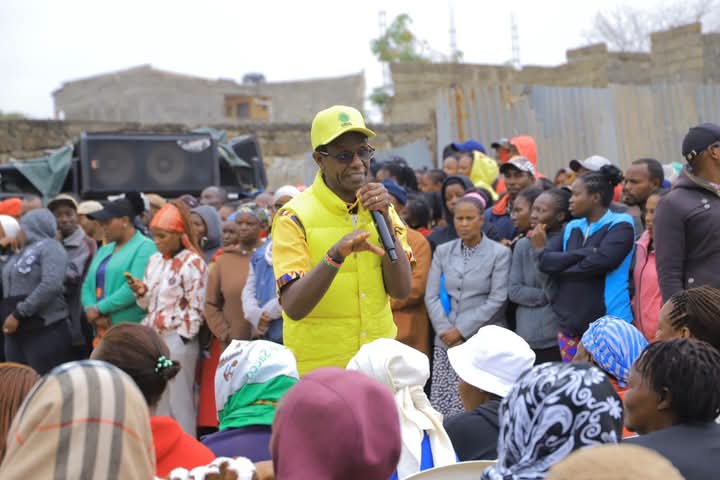
Muchina was the UDA party candidate in the July 16 Ol Kalou parliamentary by-election but lost to Democracy for the Citizens Party (DCP) candidate Sammy Douglas Kamau Waweru.
Mandate of Nairobi River Commission
Official results released by the Independent Electoral and Boundaries Commission (IEBC) show that Waweru garnered 35,440 votes against Muchina’s 5,450.
The Nairobi Rivers Commission is mandated to coordinate the restoration, rehabilitation and sustainable management of the Nairobi River Basin.
Read more: Muchina meets Ruto at State House after Ol Kalou by-election loss
It brings together national and county government agencies to spearhead environmental conservation initiatives, improve water quality and oversee urban regeneration projects aimed at revitalising the river ecosystem.
The commission also works with development partners and local communities to address pollution, restore degraded riparian land and promote sustainable use of the Nairobi River, which remains central to environmental conservation and urban renewal efforts in the capital.


About the Author