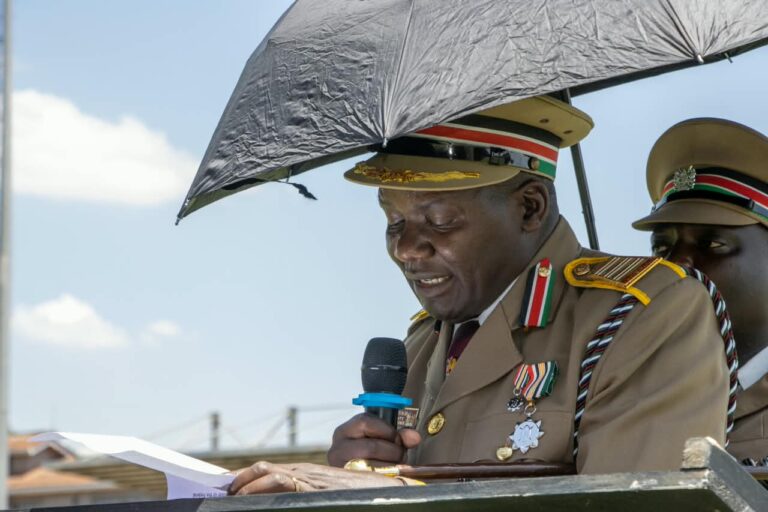
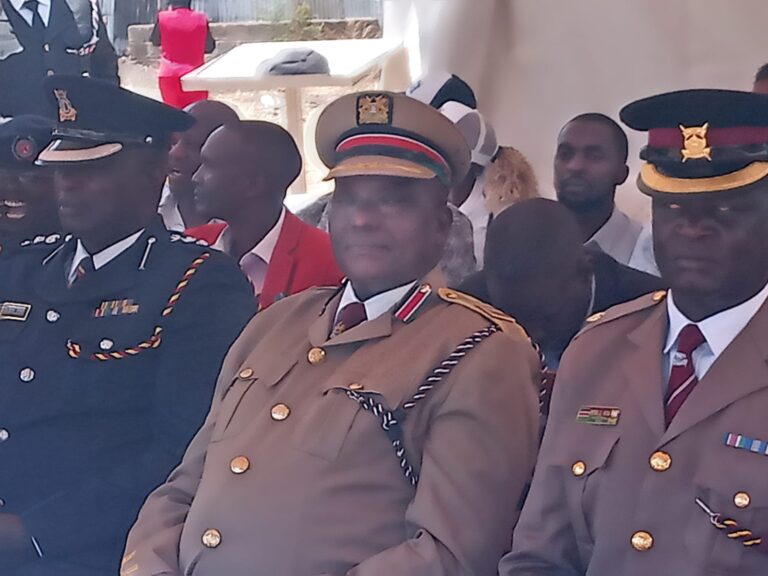
President William Ruto inspects a guard of honour during Jamhuri Day celebrations at Nyayo Stadium, Nairobi. Photo/PCS
By Wanderi Kamau
President William Ruto on Thursday used his Jamhuri Day speech to declare that Kenya has reached a historic turning point and is now entering what he termed the “next chapter of economic freedom,” outlining a broad series of reforms in agriculture, education, healthcare, infrastructure, energy, and public finance.
Speaking at Uhuru Gardens, Nairobi, the President said the gains made since independence were significant, but incomplete, and called on Kenyans to embrace bold national transformation anchored on productivity, dignity, and shared prosperity.
President Ruto began his address with a tribute to the country’s independence heroes, emphasising that the freedoms enjoyed today were won through immense sacrifice.
“Our forefathers stared imperial power in the face and declared, with unshakable conviction, that Kenya would be free,” he said, recalling the lowering of the Union Jack 62 years ago.
He noted that while the first generation secured political independence and a later generation pushed for multiparty democracy, dictatorship reforms, and the 2010 Constitution, today’s generation must deliver economic liberation.
“We must ask ourselves: have we been faithful stewards of the freedom they won?” he posed, adding that independence “did not amount to freedom in its fullest sense” as poverty, disease, and ignorance persisted.
Ruto hailed pro-democracy activists of the 1980s and 1990s whose “resolve and courage” restored human rights and paved the way for the 2010 Constitution, which he described as a powerful rights-based framework.
Economic reforms: Agriculture, education, healthcare
The President outlined sweeping strides made under the Bottom-Up Economic Transformation Agenda (BETA), arguing that the administration has focused on the majority who were historically marginalised.
In agriculture, he said digitisation had brought 7.2 million farmers into one database, enabling targeted subsidies and reforms in production.
“The results are undeniable—maize production is up, unga prices are down, tea is rising, coffee is rebounding, dairy is expanding, and the sugar industry has been revamped,” he said.
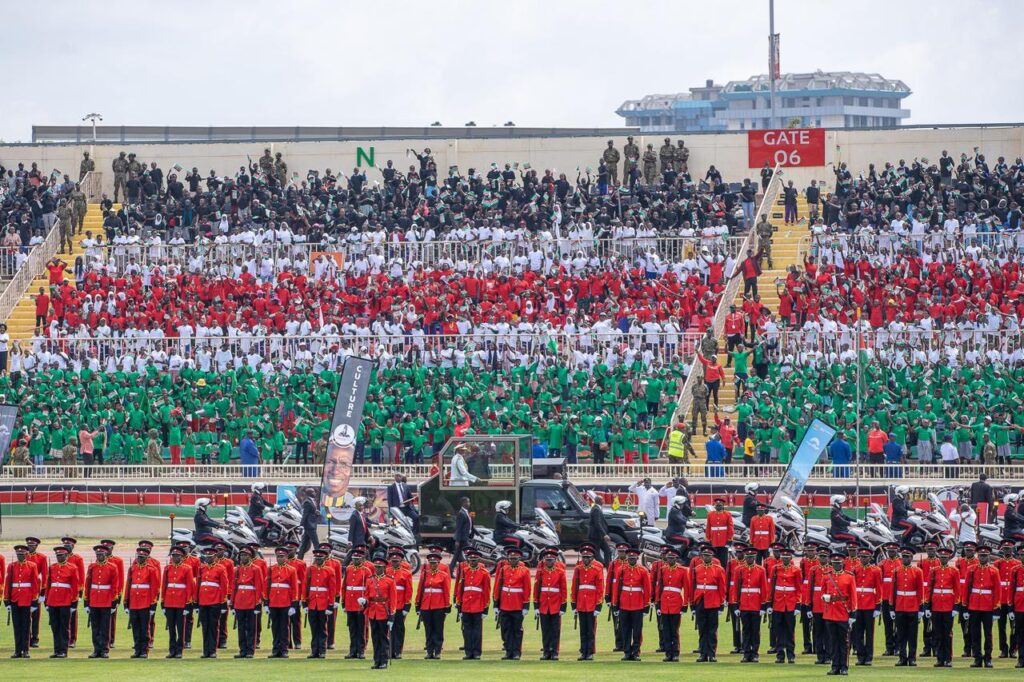
Thousands of Kenyans who turned up during Jamhuri Day celebrations at Nyayo Stadium, Nairobi. Photo/PCS
On education, Ruto announced that Kenya had hired 76,000 teachers in three years, with the number expected to reach 100,000 next month—“the largest recruitment in Kenya’s history.”
He added that nearly 500,000 learners had benefited from the new student-centred funding model designed to match scholarships and loans to financial need and academic merit.
Read more: Kabogo, Oduor, Kinyanjui get State Honours from Ruto
In healthcare, Ruto said 110,000 Community Health Promoters had visited more than 9 million households, and that the number of Kenyans under the Social Health Authority had grown from 8 million to 28 million.
“Kenyans who were once forgotten are now in the healthcare equation,” he said, adding that vulnerable groups’ medical costs were now fully covered by the government.
Ruto also highlighted the Housing Programme, stating that 240,000 affordable homes and 400 markets were under construction, providing about 480,000 jobs.
Massive infrastructure and energy ambitions
Ruto reaffirmed his administration’s KSh 5 trillion roadmap unveiled during the State of the Nation Address, anchored on infrastructure expansion, food security, and energy generation.
He announced:
- 2,500km of highways for dualing
- 28,000km of roads for tarmacking
- Modernisation of JKIA and regional airports
- Extension of the SGR to Malaba by 2026
- Extension of the oil pipeline to Uganda
The President said such infrastructure would “stitch the nation together” and power economic growth.
On food security, he detailed plans to construct 50 mega dams, 200 mini dams, and 1,000 micro dams to enable irrigation for 2.5 million additional acres, saying Kenya must no longer rely on unpredictable rainfall.
He also announced a bold plan to generate 10,000MW of new energy within seven years, citing the growing demand from industries, digital services, and modern technologies.
New financing model & privatisation reforms
Ruto defended recent economic measures, including NSSF reforms, new savings policies, and the Hustler Fund, which he said has issued over KSh 80 billion in credit and helped 7 million Kenyans clear negative CRB listings.
The President announced the establishment of the National Infrastructure Fund, created under the newly signed Government-Owned Enterprises Act, which aims to raise private capital for national development through asset monetisation and public–private partnerships.
“For every shilling in the Fund, we will attract ten more from long-term investors,” he said.
Read more: ODM split widens over cooperation with Ruto
On Monday, he said, the Cabinet will also consider a Sovereign Wealth Fund policy to protect national savings for future generations, stabilise the economy during shocks, and support strategic investments.
The President concluded his address by warning of a growing “integrity deficit” and condemned corruption, tribalism, and negative political mobilisation, saying they threaten Kenya’s economic ambitions.
“Corruption is not merely theft of money; it is the theft of hope, opportunity, and destiny,” he said, urging Kenyans to rebuild values around honesty, responsibility, and patriotism.
Ruto said Kenya’s future depends on peace, national unity, and a renewed moral foundation.
“Our founding fathers defeated colonial domination. The generation after broke the chains of dictatorship. The onus is on our generation to achieve economic freedom,” he declared.
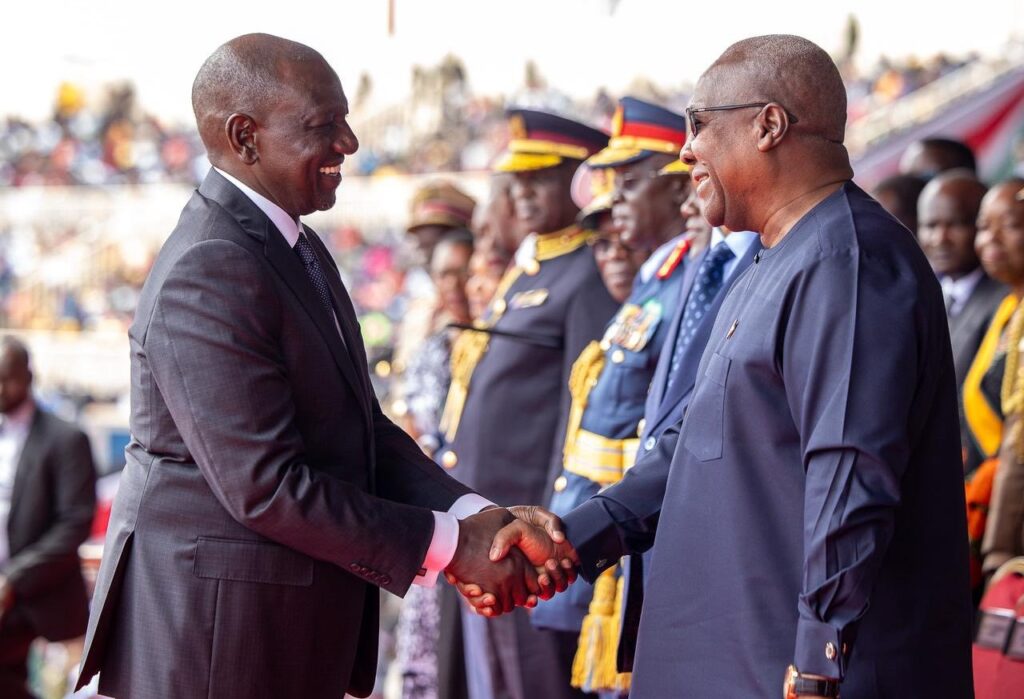
President William Ruto and his Ghanian counterpart, John Dramani Mahama, who was the guest of honour during Jamhuri Day celebrations at Nyayo Stadium, Nairobi. Photo/PCS


About the Author