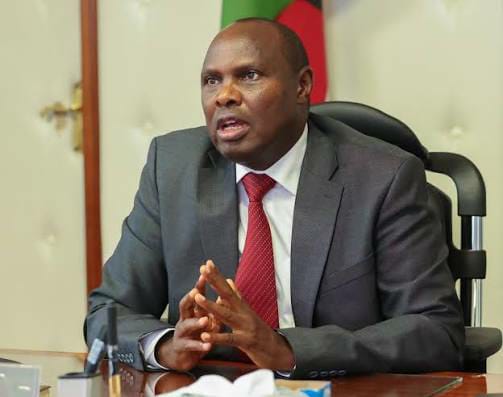
Health Cabinet Secretary Aden Duale. Photo/Handout
By Newsflash Reporter
At least five Kenyans have died from Mpox as the country battles a fresh outbreak of the viral disease, Health Cabinet Secretary Aden Duale has announced.
A total of 582 cases have been reported nationally since the re-emergence of the disease earlier this year, with 314 patients still undergoing treatment or isolation.
In a press release dated August 1, 2025, Duale confirmed that the resurgence has affected 44 out of the country’s 47 counties, underscoring the nationwide threat. Nairobi remains the epicentre of the outbreak, recording 324 cases so far, followed by Kiambu (40), Machakos (24), Kajiado (21), and Mombasa (12).
“The Ministry of Health has recorded 582 cases of Mpox in Kenya since its re-emergence, with 314 currently active and five deaths reported,” said Duale.
Highest risk: Men aged 20–39
According to the Ministry, most infections have occurred among males aged between 20 and 39 years, with 77% of the total cases falling within this demographic. This group is considered to be at the highest risk due to specific behavioral and biological factors.
Mpox, formerly known as Monkeypox, is a viral disease that spreads through close contact with an infected person—including skin-to-skin contact, respiratory droplets, and exposure to contaminated materials.
Read more: Kenya confirms three more MPox cases
The current outbreak has seen a higher incidence among men who have sex with men (MSM), prompting the Ministry to issue tailored guidelines for prevention.
“While Mpox is not classified as a sexually transmitted infection (STI), we have noted that transmission during sexual contact—particularly among MSM groups—has been reported,” Duale explained.
He added that stigma and misinformation remain barriers to effective disease control and called for a more inclusive public health approach.
Isolation and vaccination
The Ministry assured Kenyans that it is implementing robust response strategies, including case isolation, contact tracing, vaccination of high-risk groups, and targeted public education. Although Kenya has a limited stockpile of Mpox vaccines, Duale noted that the available doses are being reserved for frontline health workers and individuals at highest risk.
Dr. Sultani Matendechero, head of the Division of Disease Surveillance and Response, also called for early reporting of symptoms. “Early identification, isolation, and treatment are key to stopping the spread of Mpox. If you experience symptoms like fever, rash, swollen lymph nodes, or fatigue, seek immediate medical attention,” he advised.
Read more: How Uganda is reshaping the HIV response without U.S. aid
The Ministry is also working closely with county governments and community-based organizations to amplify awareness campaigns and reduce stigma.
The World Health Organization (WHO) continues to monitor Mpox globally. While the virus was once limited to parts of Central and West Africa, recent outbreaks have spread across multiple continents. WHO has rebranded the disease from Monkeypox to Mpox to reduce stigma and enhance global communication.
Kenya has aligned its national response with WHO and Africa CDC guidelines. Cross-border surveillance and regional cooperation have also been stepped up to minimize the risk of international spread.
Government urges calm
Despite the rising numbers, Duale urged the public to remain calm, assuring that containment efforts are underway and producing results.
“There is no need for panic. We are actively managing the outbreak. However, we urge Kenyans to follow hygiene protocols, avoid close contact with symptomatic individuals, and report any suspected cases,” he said.
Duale also emphasized the importance of relying on accurate information from official government channels, warning against the spread of fear through unverified sources.
As the government intensifies efforts to contain the outbreak, the Ministry reiterated that public cooperation remains critical in halting the spread of Mpox.


About the Author