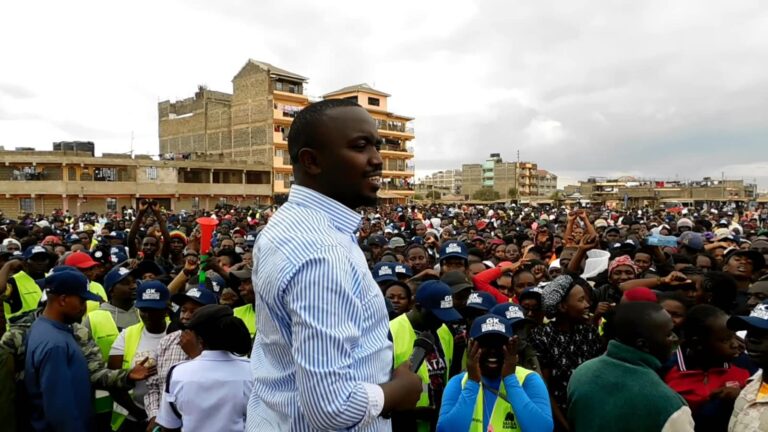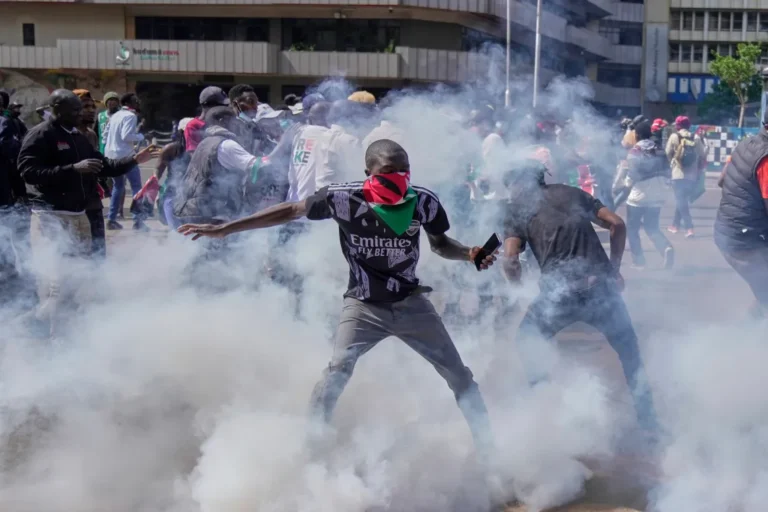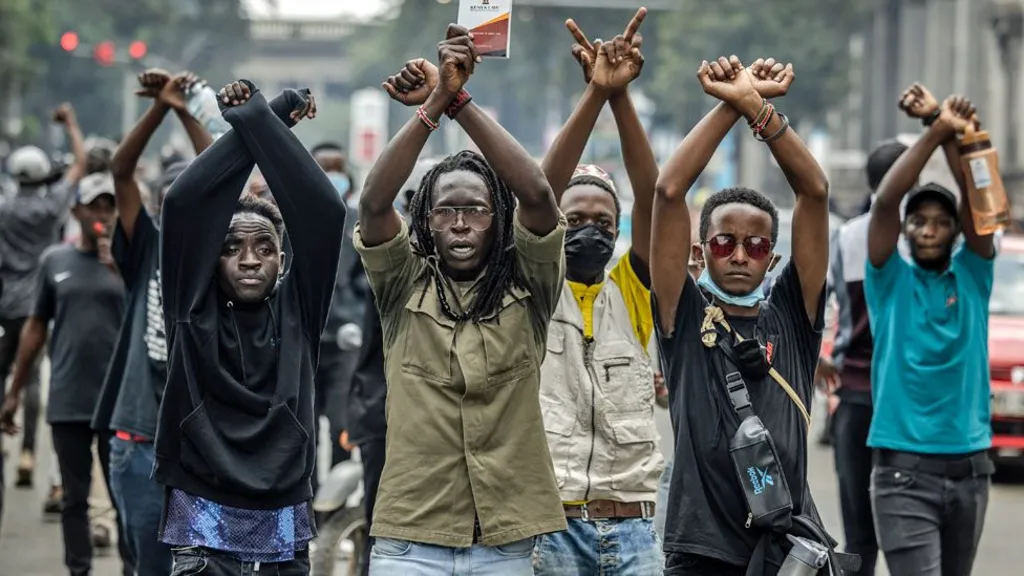
A section of the youth who turned up for protests on 25 June 2024. Photo/AFP
By Newsflash Team
A year ago, Kenya was gripped by a wave of protests that began with public outrage over a contentious Finance Bill—but quickly devolved into a national tragedy.
The unrest that followed left over 60 people dead across cities and towns, transforming chants for justice into scenes of mourning and despair.
For many affected families, time has stood still. That day not only redefined the meaning of protest but also laid bare the brutal hand of the state. It left behind a trail of pain, trauma, and haunting questions—questions that remain unanswered to this day.
As the country commemorates the first anniversary of the protests, justice remains distant and elusive. Not a single police officer has been convicted, and no one has taken responsibility for the killings.
Josinter Anyango, who lost her 12-year-old son Kennedy Onyango during the protests, lives with a daily burden of grief, broken promises, and an unyielding pursuit of accountability. Her hope is simple: that the police officer who shot her son will be named and prosecuted.
“I just want the police officer who shot my son to be named. I want the officer to face the law,” she said.
President William Ruto had acknowledged in a TV interview that Kennedy died of bullet wounds sustained during the anti-government protests. Later, he reached out to Josinter—but a year on, no action has been taken.
Kennedy, she says, was not part of the protests. He had stepped out to buy a book and never made it back home. Despite her numerous efforts to seek justice, including official follow-ups, her journey has hit a wall.
Witnesses withdraw, families left in limbo
Another victim, Rex Masai, was the first fatality of the anti-government protests. His mother, Gillian Munyao, says their fight for justice has been marred by intimidation and withdrawals by key witnesses.
“Most of them have withdrawn and we are afraid that with the ongoing delays, we might not be able to get justice for our son,” she said.
Erickson Mutisya was also shot during the June 2024 protests. His mother, Caroline Mutuku Mutisya, says she has made several official statements but has received no response or support from the authorities.
“He was my son, and every day I recall the morning of the shooting I shed tears,” she says. “We have gone to the Law Society of Kenya and the Independent Police Oversight Authority (IPOA), but nothing has happened.”
Read more: Morara Kebaso: State ‘project’ or Gen Z champion?
Tom Mwadime’s brother, Kelvin Muasya, was killed in Githurai 45. His family is equally distraught. “My mother is sick and can barely walk. She’s tried to get us an audience so we can seek justice, but nothing is forthcoming,” Mwadime lamented.
Denzel Omondi, one of the youths who had filmed himself at Parliament during the protests, was later found dead in a water-filled quarry in Juja—12 kilometres from his home. A postmortem revealed bruises and signs of drowning.
“He was still alive when he was thrown into the water. We will pursue all possible avenues to find the truth,” said Apollo Mboya, the family’s lawyer.
A nationwide toll of grief
June 25 was also the day Edith Wanjiku Kamau lost her 19-year-old son, Ibrahim. A boda boda rider, he was shot and killed. “He was my baby—quiet, respectful and hardworking. Losing him feels like losing a part of myself,” she said.
Daniel Otieno lost his 13-year-old brother, Kelvin Odhiambo, in the Nairobi CBD. “Why are they not willing to help us get justice?” he asked.
Joseph Obenge Nyangare’s son, Charles Osewe Adero, was beaten and dragged away by police before his body was found at Mama Lucy Hospital morgue. “His bravery may have put him at risk, but he didn’t deserve this,” said his father.
Eric Kayoni, a CPA graduate and student at the University of Nairobi and KCA, was also gunned down near Parliament. Another youth, Evans Kiratu, was killed by a teargas canister fired by police. His mother, Ann Wanjiru, asked: “Why are you killing our children?”
In Kisumu, Benson “Scot” Mbithi was shot near the bus terminus. His mother, Penina Mueni, described him as a kind and peace-loving young man. In Mombasa, Emmanuel “Giggs” Tata died after inhaling teargas when police cornered protesters and fired from both sides.
Read more: Kenya rebukes foreign envoys over stand on Gen Z demos
In Kakamega, Caroline Shiramba, a 35-year-old groundnut vendor, was shot in the back as she tried to flee the chaos. And in Eldoret, Credo Oyaro, a 17-year-old Form Four student and Arsenal fan, was gunned down near a local club.
“Life has never been the same,” said his cousin Lyn Oyaro. “Football was his life. He would have turned 18 this September.”
A recent report by Missing Voices, a civil society coalition, noted a 24% increase in enforced disappearances and police killings in 2024 compared to 2023. Disappearances jumped by 450%, from 10 to 55. Protest-related killings between June and August alone totaled at least 60, the report said.
Despite public outcry, families across the country are still pleading for justice, accountability, and recognition for the loved ones they lost. Their wounds remain fresh, their memories vivid—and their patience wearing thin.


About the Author