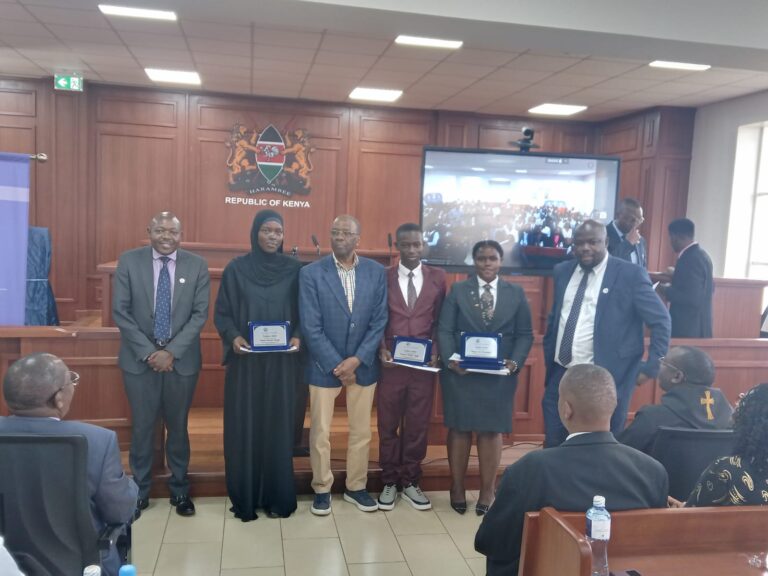
TSC Acting Chief Executive Officer Eveleen Mitei. Photo/Kenya’s Parliament
By Newsflash Reporter
The Teachers Service Commission (TSC) has cautioned that the existing teacher shortfall—driven by inadequate funding—is set to intensify in 2026 with the introduction of senior school, posing a major threat to the right to quality basic education.
TSC’s warning is highlighted in a report by the Constitutional Implementation Oversight Committee (CIOC) of the National Assembly. The document warns that the persistent shortage of teachers in public institutions continues to erode learning standards in the country. The committee, chaired by Suba South MP Caroli Omondi, also criticised the uneven deployment of teachers nationwide, pointing to densely populated counties such as Kakamega where excessive workloads are triggering burnout. “The committee noted that counties like Kakamega specifically demonstrate severely inadequate teacher distribution ratios,” the report states, noting that disparities have left some constituencies with “complete absence of teaching staff while others maintain adequate coverage”. For the current financial year, TSC received Sh378.2 billion, with Sh2.4 billion earmarked for hiring permanent teachers and Sh7.2 billion for recruiting junior school interns.
Mounting pressure from rising enrolment
“The commission faces significant challenges in fulfilling its mandate to recruit and employ registered teachers. The primary impediment is the inadequate budget allocation, which has resulted in critical teacher shortage,” the report notes.
International standards recommend a teacher-to-learner ratio of 1:25, meaning a teacher should not handle more than 25 learners. Kenya’s ratios differ by level, with recent data placing pre-primary at 1:38, primary at 1:46, junior school at 1:38 and secondary at 1:34. In some remote regions, ratios surpass 1:70. The strain created by the shortages is intensified by rising enrolment, new learning areas and insufficient facilities such as classrooms and laboratories, with rural schools bearing the brunt.
Read more: Inside the struggles of intern graduate teachers
The document notes that TSC lacks adequately trained teachers in newly introduced subjects such as leather craft, sculpturing, jewellery and ornament making, media technology, marine and fisheries technology, general science and indigenous languages. Records submitted to Parliament show that junior and senior schools need about 129,392 teachers. Recent recruitment of permanent staff and interns to narrow the gap has not eased the pressure, the report adds. TSC is cited stating that it has never reached ideal staffing levels since its inception, underscoring the “persistent nature of this challenge.”
Uncoordinated establishment of new schools
The report further highlights that the crisis has been compounded by uncoordinated establishment of new schools “without corresponding budgetary provisions for teaching staff”. “The proposed solutions include securing increased budgetary allocations from the National Assembly for teacher recruitment, strengthening coordination among stakeholders to ensure planned school establishment and implementing advisories to the national government for training teachers in new learning areas,” reads the document.
Read more: Teachers clinch Sh33 billion deal after talks with TSC
The report additionally notes that TSC faces difficulties with training colleges admitting teacher trainees who do not meet qualification standards required for registration.
“This practice undermines the quality and standards expected in the teaching profession and creates complications in the registration process,” it states. The report further notes that teachers also grapple with security risks posed by bandits, Al-Shabaab and hostile communities, “making assignments to these areas difficult to fill and maintain.”


About the Author