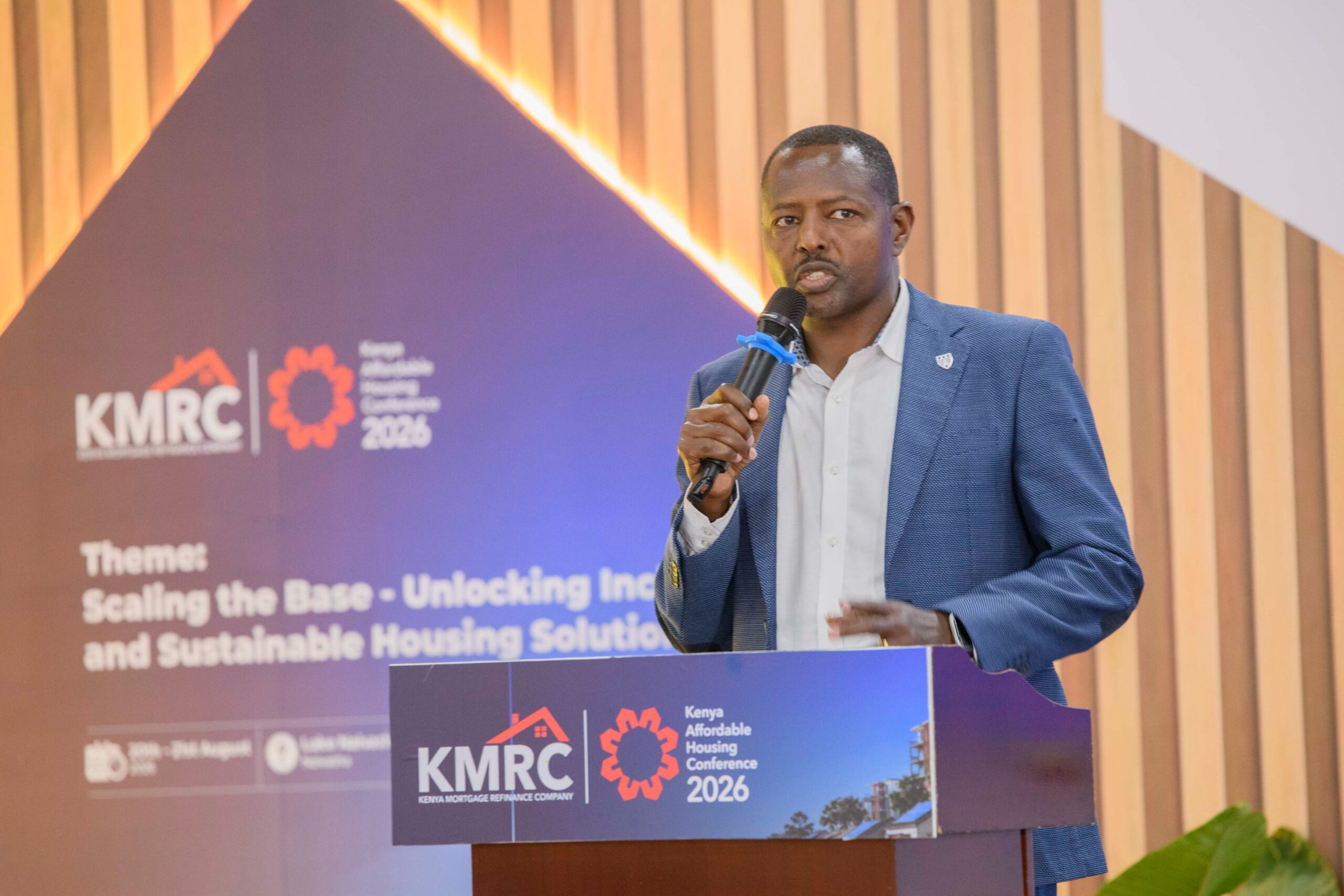
Kenya Mortgage Refinance Company (KMRC) CEO Johnstone Oltetia addreses attendees of the 5th Kenya Affordable Housing Conference in Naivasha on Thursday, August 20, 2026. Photo/KMRC
By Newsflash Writer
Kenya is seeking to increase the number of mortgages in the country from about 30,000 to one million as the Government and financial sector leaders push for new housing finance models that can accommodate Kenyans earning incomes outside formal employment.
The push featured prominently at the 5th Kenya Affordable Housing Conference (KAHC), which opened in Naivasha on Thursday, with stakeholders warning that increasing the supply of affordable homes will not solve the housing crisis unless intended buyers can access financing.
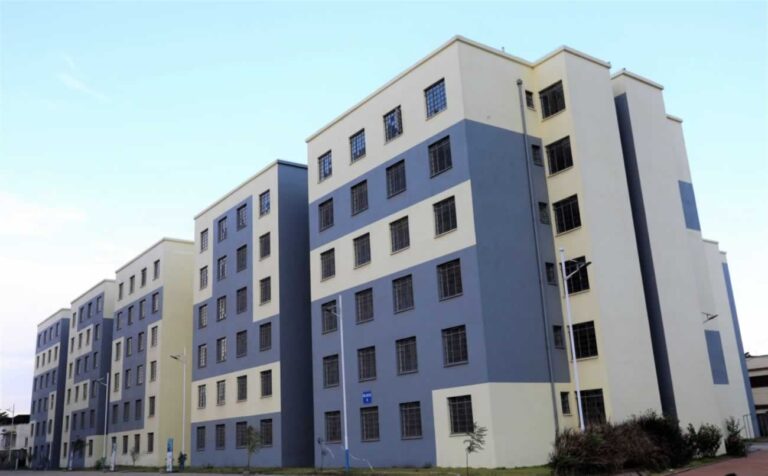
Principal Secretary for Housing and Urban Development Charles Hinga said Kenya currently has more than 280,000 housing units under construction, representing about KSh731.5 billion in contract value and supporting more than 640,000 direct and indirect jobs.
More than 45,000 units are expected to be completed by December at an estimated cost of KSh52 billion.
However, Hinga cautioned that the number of houses constructed should not be the ultimate measure of the success of the affordable housing programme.
“Ownership is not a single door. It should be a corridor with several doors, each opening onto the same outcome,” Hinga said.
Rethinking mortgage eligibility
Hinga called for a fundamental rethink of how lenders assess potential homeowners, particularly those who do not have conventional payslips or formal employment records.
Traditional mortgage lending has largely favoured borrowers with regular salaries, formal employment and predictable monthly incomes. This has made it difficult for traders, small-business owners, farmers, freelancers and other self-employed Kenyans to demonstrate their ability to repay long-term housing loans.
The PS proposed a standardised affordable housing mortgage with common requirements covering eligibility, underwriting, documentation, valuation and loan servicing.
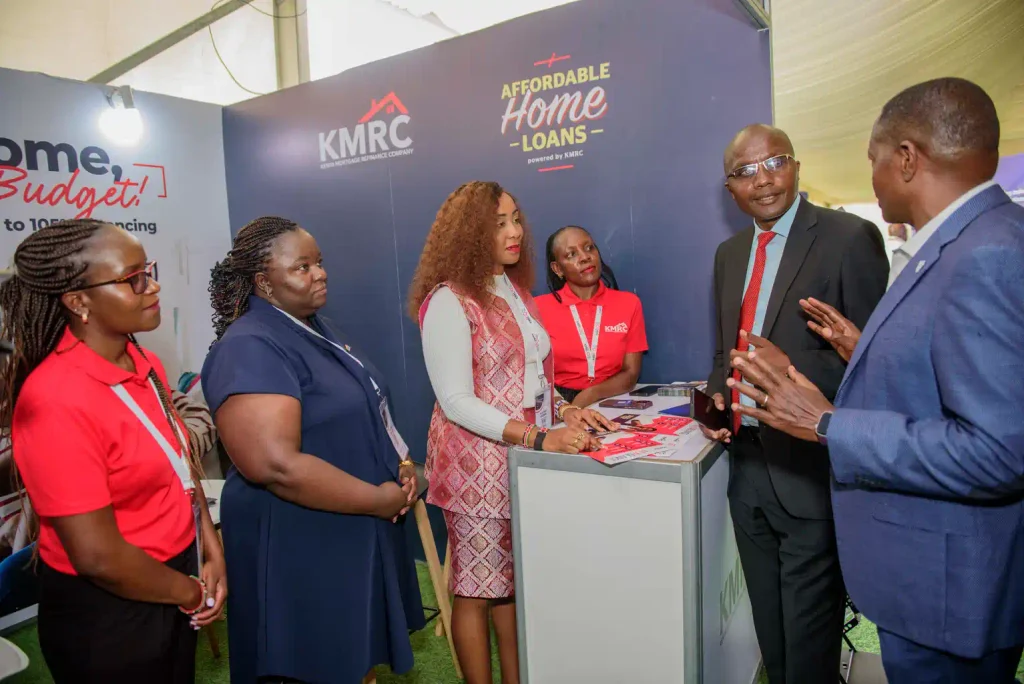
Kenya Mortgage Refinance Company (KMRC) CEO Johnstone Oltetia (looking on) engages with some of attendees of the 5th Kenya Affordable Housing Conference in Naivasha on Thursday, August 20, 2026. Photo/KMRC
He said standardisation could make it easier for mortgages to be pooled and refinanced while attracting more long-term domestic institutional capital into the housing sector.
Read more: KMRC to host 5th Affordable Housing Conference in Naivasha
Hinga also proposed an affordability framework that recognises how non-salaried Kenyans earn and spend. Under the proposed approach, lenders could consider mobile-money transactions, SACCO savings, rental payment histories, utility payments and business transactions when determining a borrower’s creditworthiness.
With more than 1.29 million Kenyans registered on Boma Yangu, Hinga said the platform could also be integrated with lenders to enable prospective homeowners to move more seamlessly from registration and prequalification to allocation, financing and ultimately acquisition of title.
“The goal is to move Kenya from approximately 30,000 mortgages towards one million by building not only houses, but the market that places Kenyans inside them,” he said.
Financing the entire housing journey
Financial institutions said mortgage access must also be considered alongside the cost of developing and living in homes.
KCB Kenya Director of Mortgage Business Caroline Wanjeri, in remarks delivered on her behalf by KCB Bank Senior Manager, Affordable Housing George Laboso, said constrained investment finance, rising construction costs and limited supply of serviced land continue to affect the final cost of homes.
“We are looking at the entire housing journey while seeking to make these solutions more accessible and responsive to evolving customer needs,” Wanjeri said.
Read more:Gov’t hails KMRC’s role in Affordable Housing agenda
KCB also called for greater use of alternative building materials to reduce construction costs, alongside developments incorporating energy efficiency, sustainable materials and climate-resilient infrastructure.
Shelter Afrique Development Bank Managing Director and CEO Thierno-Habib Hann said conventional housing finance models often assume formal employment, reliable land records, long-term funding and mature financial markets, conditions that do not reflect the realities of many African economies.
With more than 80 per cent of Africa’s workforce earning within the informal economy, Hann called for blended finance, alternative underwriting, capital-market instruments, green housing finance and digital solutions.
Kenya Mortgage Refinance Company (KMRC) Chief Executive Officer and Managing Director Johnstone Oltetia said the industry must address housing supply and access to finance simultaneously.
“This year’s theme speaks to both the scale of the challenge and the promise before us: to close the twin gaps that constrain access at scale,” Oltetia said.
He challenged stakeholders to focus on practical solutions that translate housing commitments into actual ownership.
“Let this be the conference where we stop measuring housing by what we plan, and start measuring it by what we deliver,” Oltetia said.
The two-day conference, themed “Scaling the Base: Unlocking Inclusive and Sustainable Housing Solutions,” has brought together policymakers, lenders, SACCOs, developers, development finance institutions and housing specialists from Kenya and other markets. The conference concludes on Friday, August 21.



About the Author