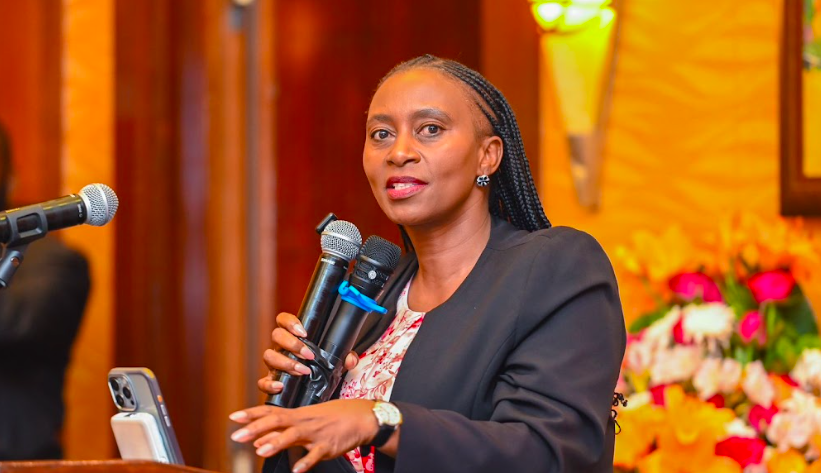
Public Health PS Mary Muthoni. Photo/KBC Digital
By Leon Lidigu
leonlidigu@gmail.com
As curtains fell at this year’s World Health Summit 2026 held in Nairobi, the continent had no option but to address the elephant in the room.
This is after United Nations Children’s Fund highlighted that despite a steep decline in new infections in the last decade, Eastern and Southern Africa as a region is the epicenter of the HIV epidemic, home to more than 60% of the world’s children and adolescents living with HIV.
“Western and Central Africa: This region lags significantly in the elimination of vertical transmission. Countries such as Nigeria, Cameroon, and the Democratic Republic of the Congo account for a disproportionately high number of new pediatric HIV acquisitions and AIDS-related child deaths,” UNICEF observes.
Whether Africa will finally build self-reliant health systems that will help in nipping things like pediatric HIV in the bud or continue outsourcing its healthcare future to shrinking foreign funders and imported solutions remains a major question.
“We want to move these health conferences and summits from just being mere talk-shops to real implementation,” Kenya’s Public Health and Professional Standards PS Mary Muthoni said in an exclusive interview before pointing out the key bottlenecks when it comes to eliminating pediatric HIV.
Key bottlenecks
• “Testing Gaps: Infants face testing delays. The WHO Regional Office for Africa recommends testing at birth, six weeks, and throughout breastfeeding, but routine access to these early diagnostic tools is unevenly implemented.
• Treatment Disparities: Children often lack access to child-friendly formulations of optimal antiretroviral drugs, which are more readily available to adults.
• Adolescent Retention: Older children and adolescents face high rates of loss to follow-up, which leads to missed medications and severe opportunistic infections. Additionally, adolescents living with HIV face higher risks of mental health and behavioral disorders,” PS Muthoni listed while reminding that, in Africa, without doubt, the elephant in the room is transitioning from donor aid to sustainable financing.
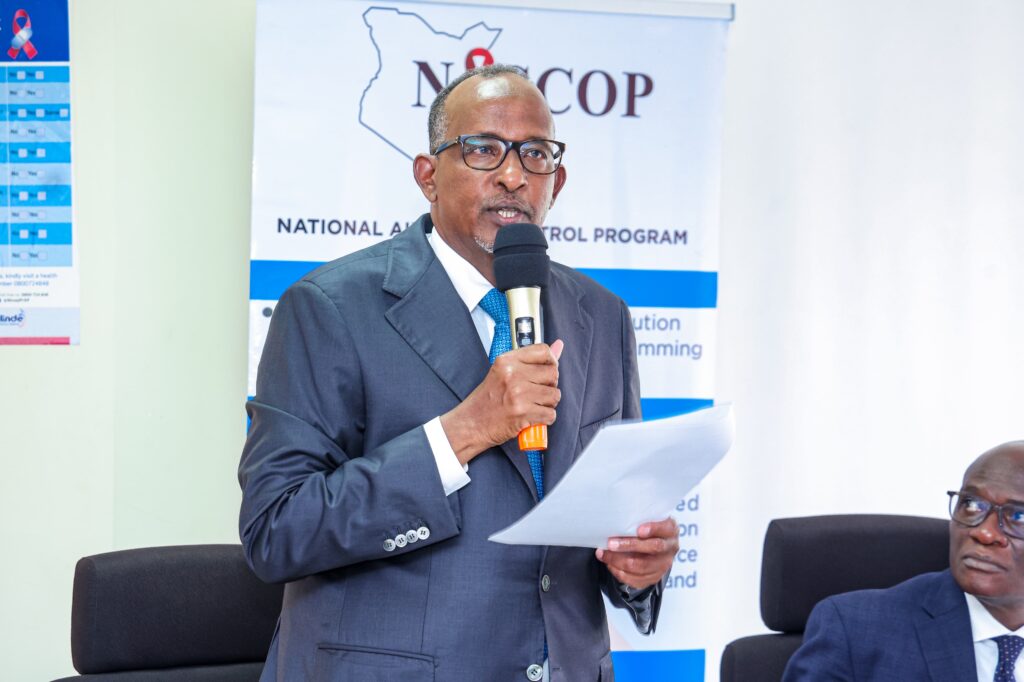
“In our country, health is a devolved function and so we are working to ensure that there is evidence-based policy for these devolved units, which will also propel research and domestic resource mobilisation,” she said, noting that for decades Africa’s health sector has revolved around declarations, donor pledges, strategic frameworks, and international conferences promising transformation.
Read more: How senior health officials doctored organ transplant dossier
Although, on the ground, things are very different as the continent still grapples with overstretched hospitals, weak primary healthcare systems, workforce shortages, poor emergency preparedness, and unequal access to care.
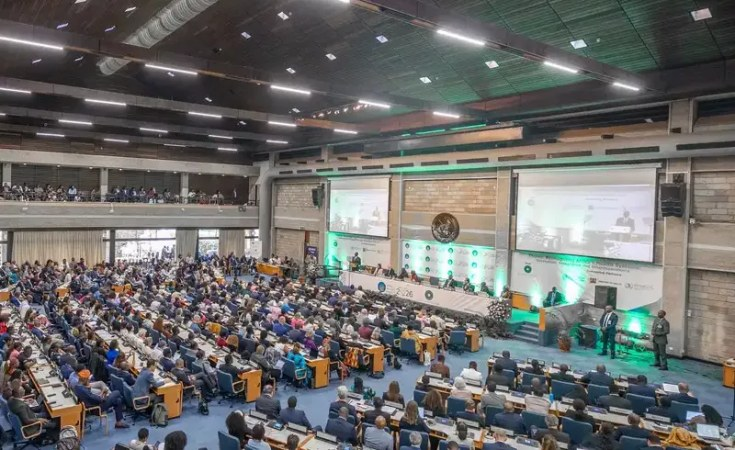
Those contradictions dominated discussions at the World Health Summit Regional Meeting 2026, held from 27 to 29 April at the United Nations Office at Nairobi and hosted by Aga Khan University.
According to the PS, HIV response has always been defined by resilience, overcoming challenges through innovation, collaboration, and activism.
Funding and sustainability
She is of the view that the continent will need to draw deeply on that resilience in the years to come as HIV response must rethink its approach, with shifting geopolitics and funding crises threatening progress.
“Recently, the International AIDS Society reminded us that sustainable funding requires countries to rethink financing through domestic investment, innovative models, and private sector engagement,” PS Muthoni went down memory lane.
“I expect such summits to facilitate deals between the private sector, Ministries of Health, and other stakeholders so that there is full focus to pull resources and budgets together and avoid working in silos.
Let’s have one budget, one focus, and one implementation strategy,” she highlighted.
“In the recent past, when a donor came, everyone has been wanting to do their own programs. You want to spend money doing the same thing that the government is doing.
Why don’t we now pull all these resources into one pot instead of working in silos?” PS Muthoni posed.
“Kenya is strengthening efforts to sustain gains in the fight against HIV/AIDS while responding to emerging challenges, including shifting global health financing and the need to integrate HIV services within the broader health system,” she assured while reminding that Kenya still carries the seventh-largest HIV epidemic globally and a rising pediatric HIV problem, hence the need for sustained commitment to prevention, treatment, and care.
Read more: Exclusive: Mishra celebrates Mediheal’s vindication by MPs
As the country works toward achieving the UNAIDS 95-95-95 targets—currently at 97-87-83—the PS stressed the importance of remaining vigilant against emerging challenges, including rising mother-to-child transmission and changing global funding priorities.
“Kenya is advancing a people-centred approach by integrating HIV services within the Universal Health Coverage (UHC) framework, supported by the Social Health Authority (SHA) and the Social Health Insurance Fund (SHIF), with over 29 million Kenyans already enrolled.
The critical role of Primary Health Care (PHC) networks is the backbone of integrated service delivery, ensuring HIV prevention and treatment are offered alongside other essential services, including care for non-communicable diseases and mental health,” she said.
Kenya’s response
Kenya’s Health CS Aden Duale agrees.
At WHS 2026, he underscored the importance of digital health innovation, data-driven decision-making, resilient supply chains, and local production of antiretroviral medicines in strengthening national health security.
“Our collective goal remains clear: building a health system that delivers quality, people-centred care without barriers,” he said.
He reminded delegates that according to UNICEF, Sub-Saharan Africa bears the brunt of the global pediatric HIV epidemic, housing approximately 87% of all children living with HIV worldwide.
“While mother-to-child prevention and treatment coverage have expanded, major gaps persist.
Only about 55% of children with HIV receive life-saving antiretroviral therapy (ART), severely lagging behind adult coverage rates,” he told delegates.
The scale of the burden
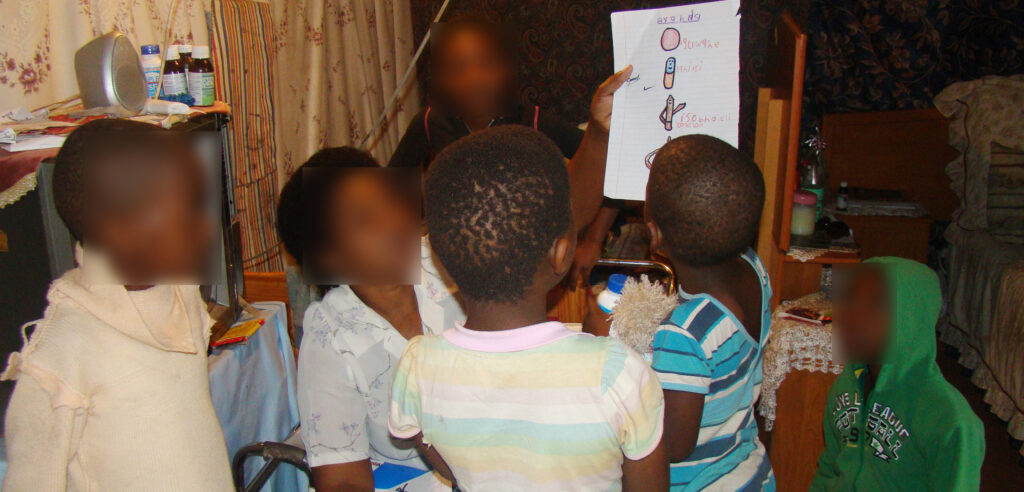
Prevalence: Approximately 1.4 million children globally are living with HIV, with the vast majority in Sub-Saharan Africa.
New Infections: Around 300 children acquire HIV every single day, primarily through mother-to-child transmission during pregnancy, birth, or breastfeeding.
Mortality Rate: A child born with HIV is six times more likely to die without timely diagnosis. Without immediate treatment, 50% of HIV-positive infants will not survive past their second birthday, and 80% will die before turning five.
Source: Elizabeth Glaser Pediatric AIDS Foundation
In February 2023, ministers and representatives from twelve African countries committed themselves and laid out their plans to end AIDS in children by 2030. International partners set out how they would support countries in delivering on those plans, which were issued at the first ministerial meeting of the Global Alliance to end AIDS in children.
The 12 countries with high HIV burdens joined the alliance in the first phase and included Angola, Cameroon, Côte d’Ivoire, the Democratic Republic of the Congo, Kenya, Mozambique, Nigeria, South Africa, the United Republic of Tanzania, Uganda, Zambia, and Zimbabwe.
“Currently, around the world, a child dies from AIDS-related causes every five minutes.
Read more: Teachers raise concerns over SHA Health Scheme shift
Only half (52%) of children living with HIV are on life-saving treatment, far behind adults, of whom three quarters (76%) are receiving antiretrovirals.
In 2021, 160,000 children newly acquired HIV. Children accounted for 15% of all AIDS-related deaths, despite the fact that only 4% of the total number of people living with HIV are children,” the WHO Africa Region office then noted before announcing that the Dar-es-Salaam Declaration on ending AIDS in children had been endorsed unanimously.
“This gathering of leaders is uniting in a solemn vow—and a clear plan of action—to end AIDS in children once and for all,” she said. “There is no higher priority than this,” Monica Geingos, the founding chair of AfricaREACH to end HIV in Children and Young People, then said.
Three years later, post the Dar-es-Salaam Declaration on ending AIDS in children, what exactly does Africa have to show?


About the Author