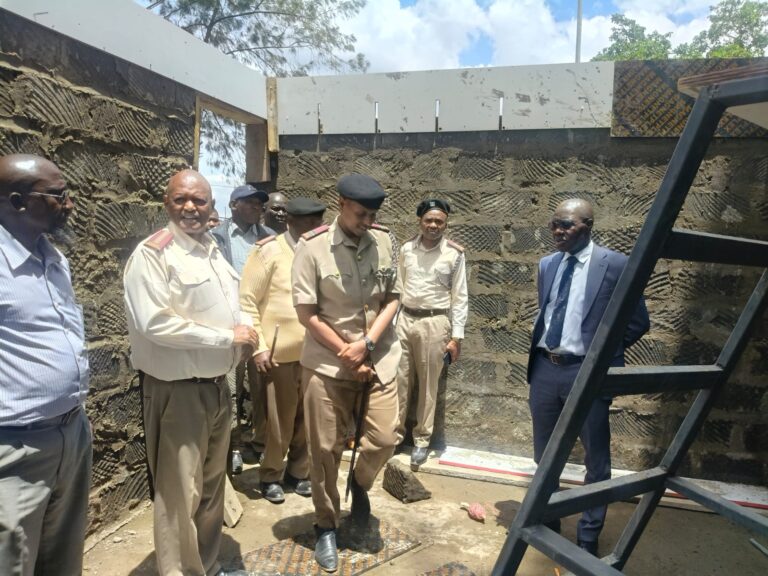
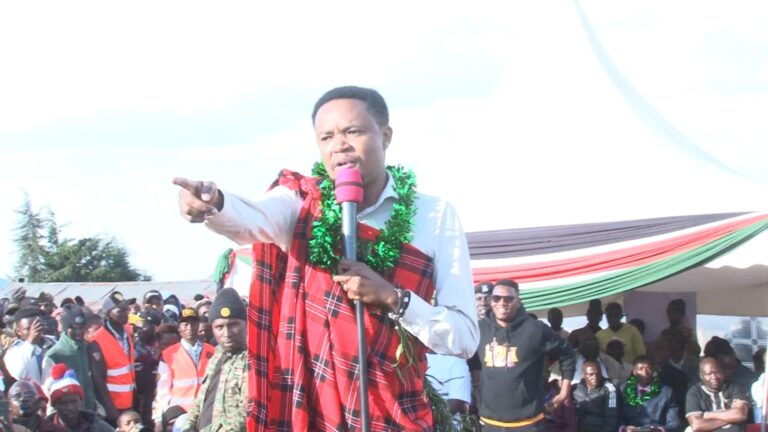
The Kenyan police officers at a parade. Photo/National Police Service.
By Newsflash Writer
The planned September recruitment of 10,000 police officers risks stalling as an escalating power struggle engulfs the National Police Service Commission (NPSC).
The standoff pits Inspector-General (IG) of Police Douglas Kanja and a bloc of uniformed commissioners against a group of civilian commissioners led by newly appointed NPSC chair Dr Amani Yudo Komora. The dispute, which has fractured the commission into two rival camps, is now threatening to derail one of the largest police hiring exercises in recent years.
The civilian faction is demanding that the IG surrender all human resource functions — including the Sh60 billion police payroll — along with powers to hire, promote, and transfer officers. Dr Komora, appointed last week to replace Eliud Kinuthia, has made it clear that the commission intends to assert its constitutional mandate.
Clash over recruitment method
At the centre of the row is a proposed shift in how police officers are recruited. The NPSC has unveiled draft regulations requiring all candidates to apply online, after which only shortlisted applicants would be invited to recruitment centres for physical fitness tests before reporting to training colleges. Proponents say the system will improve transparency, curb bribery, and reduce the chaos of mass walk-ins at recruitment venues.
However, opponents — including IG Kanja, his deputies Gilbert Masengeli and Eliud Lagat, and Directorate of Criminal Investigations boss Mohammed Amin — fear the process could create new avenues for nepotism. They argue that online shortlisting could be manipulated behind closed doors, replacing on-the-ground fairness with digital gatekeeping.
Tensions escalated further when the National Security Council, chaired by President William Ruto, reportedly advised that the online plan be suspended in favour of the traditional open-call method, where all eligible youths turn up at designated recruitment centres. Despite this, the NPSC launched nationwide public hearings on the proposal, inviting written and oral submissions from Kenyans.
Read more:Nairobi protests: How police colluded with goons
The feud deepened on August 6 when NPSC CEO Peter Leley wrote to the IG, revoking all delegated human resource powers and citing constitutional authority, recommendations from a police reforms task force led by retired Chief Justice David Maraga, and directives from Parliament’s Public Accounts Committee (PAC). The letter, copied to senior officials including the Auditor-General and Treasury Principal Secretary, declared that the commission would directly execute all HR functions going forward.
Some commissioners have publicly disowned the move, claiming it was never discussed or ratified in formal meetings. “Let anyone produce the minutes where this was agreed,” one member told reporters, speaking on condition of anonymity.
The payroll dispute is particularly contentious. PAC has ordered the IG to surrender payroll control to the commission, citing an Auditor-General’s report that revealed the NPSC had never accessed payroll data during its 2019–2022 strategic plan period. This, MPs argued, undermined accountability for billions in police salaries.
Kanja has refused to comply, insisting that payroll management is an operational tool protected under Article 245 of the Constitution, which guarantees the IG’s independence in operational matters. Article 246, however, grants the NPSC authority over recruitment, promotions, and transfers — a constitutional overlap now at the heart of the deadlock.
Call for high-level intervention
Legal experts are divided on the issue. Constitutional lawyer Charles Kanjama backs the IG’s stance, pointing out that other oversight commissions — such as the Judicial Service Commission and the Parliamentary Service Commission — do not manage the payrolls of the institutions they supervise. “It’s a matter of operational independence,” Kanjama said.
Meanwhile, some insiders warn that the continued stalemate could paralyse the recruitment process entirely. Without a resolution, the September intake could be delayed indefinitely, potentially creating gaps in police staffing at a time when the service faces increasing security demands.
Read more: Kenya downgraded on human rights over police brutality
Pressure is mounting on President Ruto and Interior Cabinet Secretary Kipchumba Murkomen to broker a compromise. With both sides digging in, any intervention will need to address not just the recruitment method but the deeper structural tension over control of human resource functions in the police service.
As public hearings on the proposed recruitment system continue, and letters fly between the IG’s office and NPSC headquarters, the future of the planned police intake hangs in the balance. Whether Kenya gets its 10,000 new officers in September may depend on whether political leaders can calm the storm now threatening to cripple the commission’s work.


About the Author