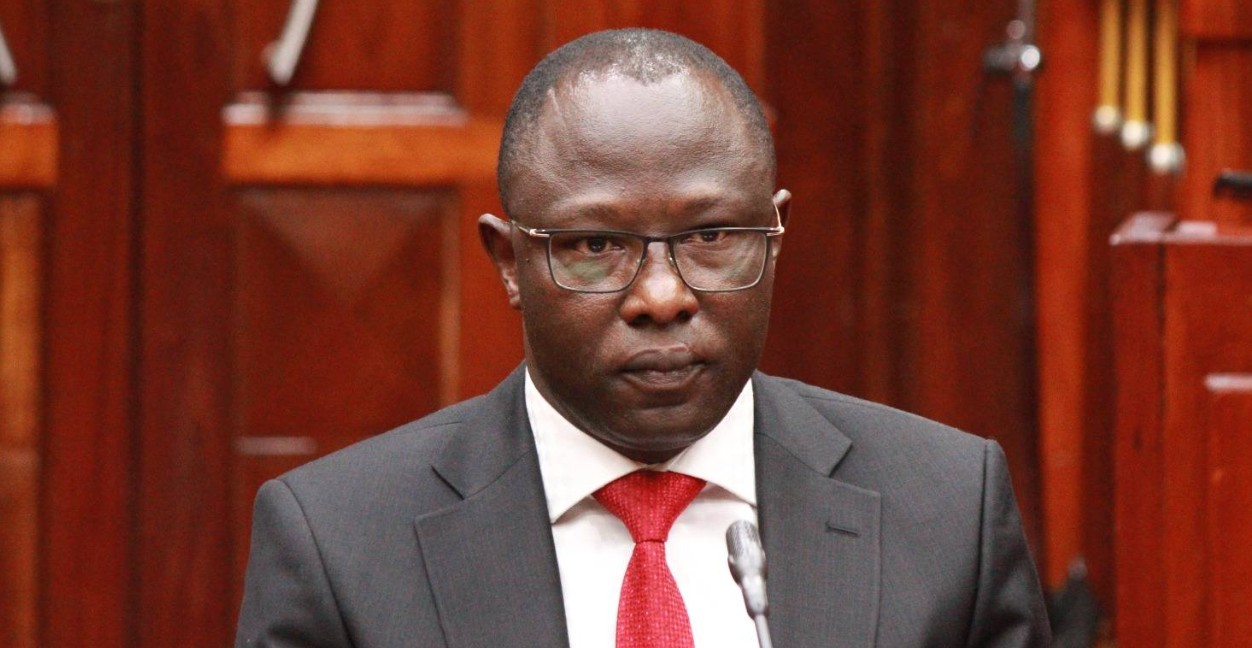
IEBC chairperson Erastus Ethekon. Photo/National Assembly
By Newsflash Writer
The Independent Electoral and Boundaries Commission (IEBC) has outlined a series of financial and operational challenges that could jeopardise preparations for the 2027 General Election, warning that a Sh13 billion budget shortfall threatens the commission’s readiness.
The concerns were raised on Wednesday, January 21, as Members of Parliament renewed pressure for the operationalisation of the IEBC Fund, which is anchored in law and intended to guarantee the commission’s financial independence while reducing reliance on discretionary disbursements from the National Treasury.
According to documents tabled before the Parliamentary Committee on Constitutional Implementation Oversight (CIOC) by IEBC chief executive Hussein Marjan, the funding gap directly affects critical areas of election preparedness, including staff remuneration and the settlement of long-standing debts.
Wage bill and mounting liabilities
The commission disclosed that it requires Sh7.63 billion to pay election officials, a core component of election planning that is now at risk due to inadequate funding. In addition, IEBC is burdened by Sh5.75 billion in pending bills, most of which stem from legal fees linked to previous electoral cycles.
Read more:IEBC to Gachagua: Present us your evidence
“These pending bills have been accumulating over time and will adversely affect the operations of the commission in conducting the 2027 elections,” the IEBC said, warning that failure to clear the liabilities could disrupt procurement and undermine service delivery.
In its report to the National Assembly, the CIOC, chaired by Suba South MP Caroli Omondi, echoed these concerns, stating that the deficit “threatens the commission’s ability to discharge its constitutional mandate effectively.” The committee urged the National Treasury to urgently bridge the shortfall.
Budget gaps and delayed funding
The committee further recommended that the Treasury provide a clear front-loading schedule for disbursement of funds to allow timely implementation of electoral activities. It noted that settling pending bills would restore supplier confidence and safeguard the commission’s operational capacity.
IEBC is mandated to conduct and supervise elections and referenda, oversee constituency and ward delimitation, register voters, carry out voter education and manage electoral technology.
Read more:The Ruto, Raila link in new IEBC team
For the 2027 polls, the commission requested Sh61.74 billion spread across the 2025/26, 2026/27 and 2027/28 financial years. The Treasury has committed Sh55 billion, which now forms the baseline for preparations, leaving a Sh13 billion gap.
IEBC sought Sh15.3 billion to be front-loaded in the 2025/26 financial year to support early activities such as voter registration and procurement of election technology. However, Parliament approved only Sh9.33 billion for the period, an increase from Sh3.82 billion in 2024/25. The proposed allocation for 2026/27 stands at Sh25.4 billion, with Sh21 billion planned for 2027/28.
Technology and polling stations
As part of its preparations, IEBC plans to procure 59,352 Kenya Integrated Election Management System (KIEMS) kits, including 3,959 earmarked for training. Only 14,000 kits acquired in 2022 will be retained, as those purchased in 2017 are now obsolete.
The KIEMS kits are used to capture biometric voter data and facilitate electronic transmission of results, relying on high-capacity batteries and portable power banks to function in areas without reliable electricity.
The commission also expects to register an additional 5.7 million voters, mainly young people, and gazette 55,393 polling stations, up from 46,229 used in the 2022 General Election.
Read more:IEBC announces temporary jobs: How to apply
Election management expert Koki Muli suggested that IEBC could reduce the number of polling stations to allow about 2,000 voters per station, noting that such a decision could be made administratively without parliamentary approval.
Treasury Cabinet Secretary John Mbadi did not respond to requests for comment. In previous remarks, he acknowledged the high cost of elections in Kenya and challenged IEBC to demonstrate prudent use of public resources as it prepares for 2027.



About the Author