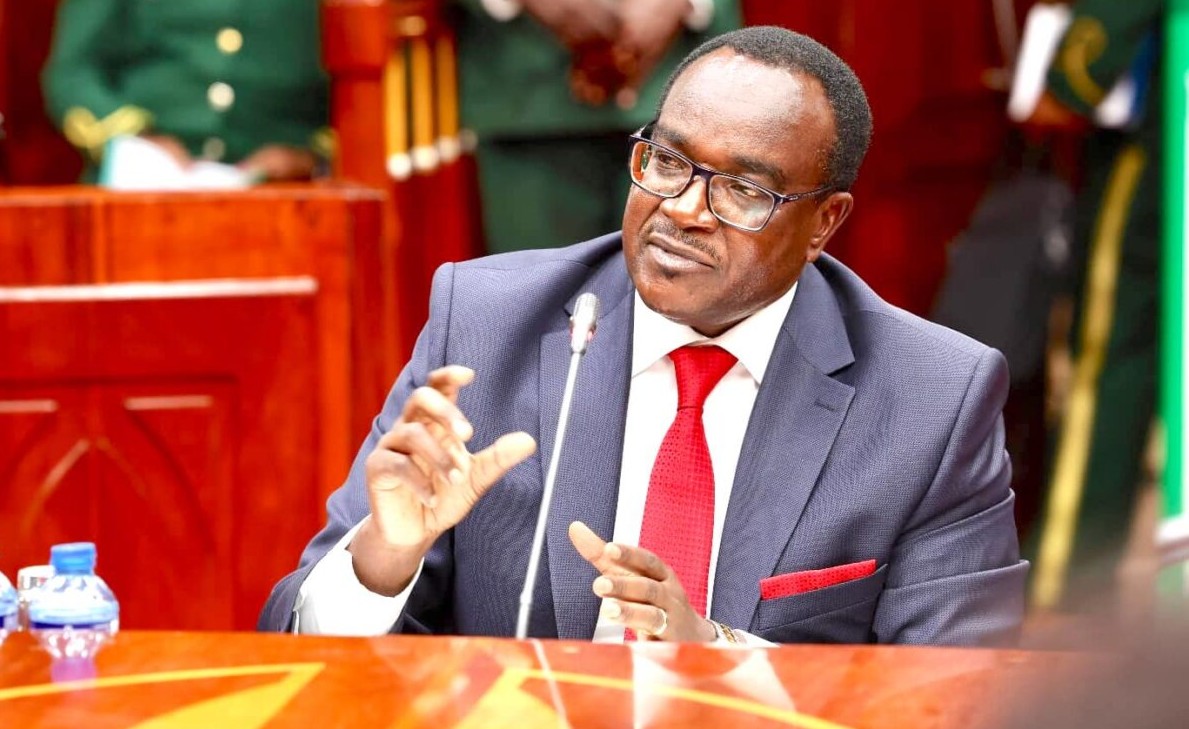
Education Cabinet Secretary Julius Migosi Ogamba. Photo/Handoout
By Newsflash Writer
The National Parents Association (NPA) and the Kenya Union of Post Primary Education Teachers (Kuppet) have demanded swift investigations into the multi-billion-shilling ghost schools scandal.
They are urging the Ethics and Anti-Corruption Commission (EACC) and the Directorate of Criminal Investigations (DCI) to act decisively and ensure those responsible are held accountable.
Their call comes in the wake of a special audit submitted to the National Assembly’s Public Accounts Committee (PAC), revealing massive theft of public funds intended for primary and secondary schools. The audit uncovered that fraudulent institutions and fictitious students had been allocated billions in capitation and infrastructure grants, even as genuine schools struggle with a Sh117 billion budget shortfall.
NPA Secretary-General Eskimos Kobia called for immediate action, citing the Auditor-General’s findings that unregistered and non-operational schools had received millions of shillings. “We want the EACC and DCI to act urgently. It’s appalling that while legitimate public schools are underfunded, ghost schools and fake learners are receiving huge sums,” said Kobia during a meeting in Naivasha. “This scandal is a slap in the face of parents and learners who are being told the government lacks money,” he added.
Widespread fraud uncovered
Kuppet Secretary-General Akelo Misori echoed the demand for a comprehensive investigation, describing the revelations as a serious betrayal of the education sector. “This kind of fraud is unimaginable. We are talking about billions disappearing into non-existent schools. The DCI and EACC must dig deep and bring the truth to light,” Misori said.
He emphasized the need for transparency and accountability in the education sector, warning that continued mismanagement could erode public trust in government institutions. “The system must be fixed. Such losses not only deprive learners of resources but also damage the reputation of our education and governance structures.”
Read more: Kenya Forgotten Schools: Education in arid regions
The audit, conducted by Auditor-General Nancy Gathungu, exposed that between the 2020/2021 and 2023/2024 financial years, at least 33 ghost schools received billions of shillings. Additionally, 723 schools reportedly hosted non-existent students, inflating enrolment data and leading to overpayments of Sh3.59 billion in capitation.
In total, the audit identified that capitation overfunding exceeded Sh3.7 billion. Among the flagged cases, 99 junior secondary schools were overfunded by Sh30.8 million, while 270 primary schools received capitation based on fictitious enrolments. Shockingly, 14 of the 83 schools sampled received a cumulative Sh16.6 billion, despite not appearing in County Directors of Education (CDE) records. Some had shut down, while others had names that didn’t match those listed in the National Education Management Information System (Nemis).
Systemic weaknesses and consequences
The report highlighted inconsistencies between Nemis records and actual school registers. Some schools were overfunded, while others were underfunded due to unreliable data. Specifically, 354 secondary schools, 99 junior secondary schools, and 270 primary schools received excess funding, while 334 secondary schools, 244 junior schools, and 230 primary institutions were shortchanged by Sh2.14 billion.
Read more: Shock as schools receive Sh87 as capitation
The anomalies were blamed on weak oversight in Nemis, the absence of digital audit trails, and poor coordination between education agencies such as the Teachers Service Commission (TSC), Kenya National Examinations Council (Knec), and the Kenya Primary School Education Assessment (Kepsea).
Parents are calling on the government to get to the root of the matter, especially at a time when schools are being forced to close early due to lack of funds. Many institutions are struggling to pay suppliers, water, and electricity bills. The NPA has also raised alarm over potential student dropouts, warning that more than 30 per cent of learners may leave school if the government slashes per-student capitation from Sh22,000 to Sh16,000.


About the Author