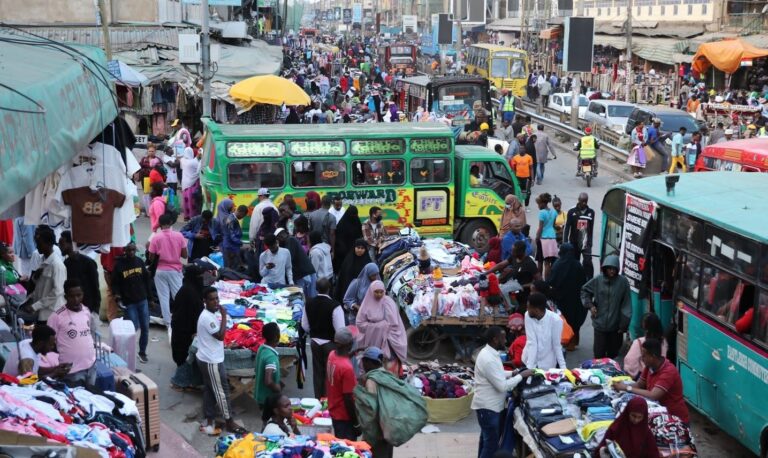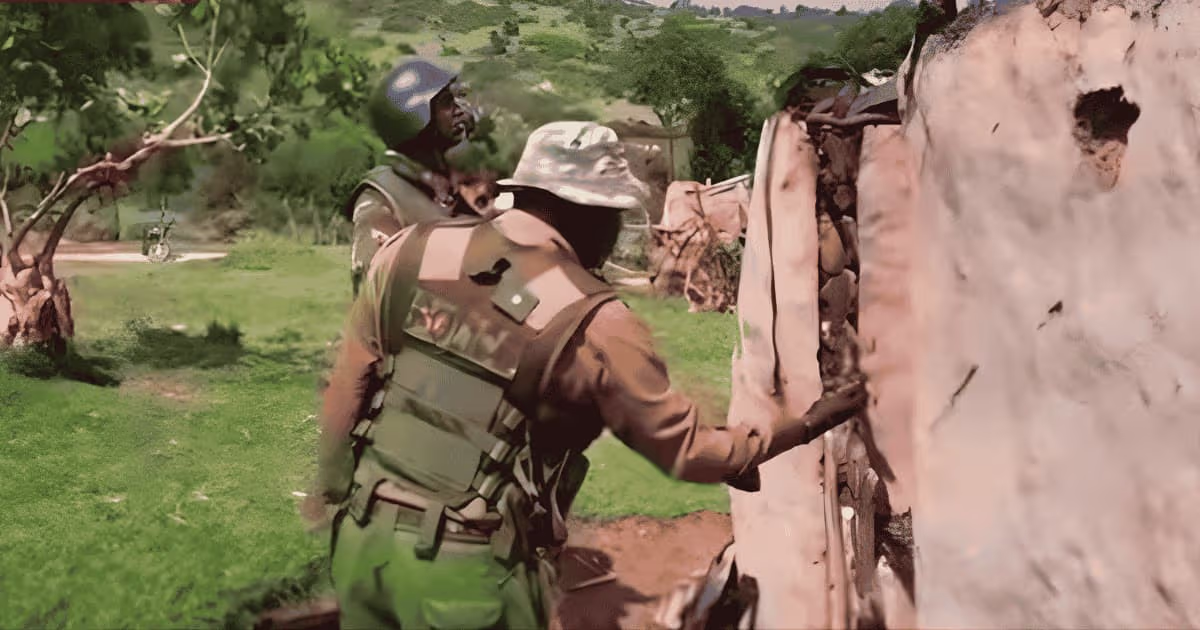
A police officer checks on a burnt hut at Trans Mara. Photo/Handout
By Newsflash Team
Four people have been killed and more than 1,800 others displaced in tribal clashes in Trans Mara, Narok County, prompting the government to impose a dusk-to-dawn curfew to contain the unrest.
Earlier reports had indicated seven fatalities. Security officials announced the curfew from 6pm to 6am while working to restore order.
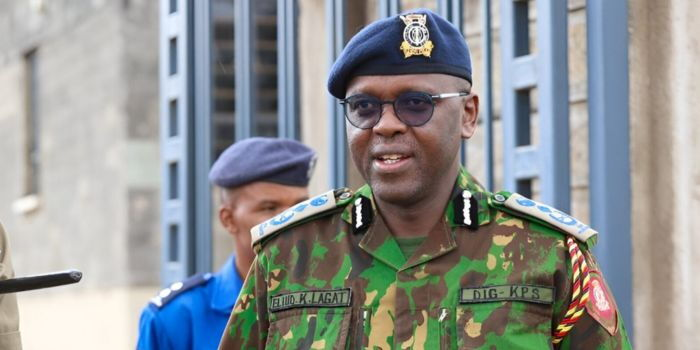
Deputy Inspector General of Police Eliud Lagat, who toured the volatile region, said parts of Trans Mara would be declared disturbed areas. Fresh fighting erupted last week when three communities clashed in Ang’ata, Barikkoi, Lolgorian, and Keyian wards.
“We are facing a situation in Lolgorian and parts of Trans Mara South and East, exacerbated by ethnic clashes between communities,” said Mr Lagat. He urged local leaders to cooperate in resolving disputes, warning that failure to do so has necessitated strict security measures.
Curfew and enforcement measures
The police chief announced that anyone inciting violence or financing unrest would face arrest and prosecution, regardless of social status. “From 6pm to 6am, no one will be allowed to move around until peace is restored. Those involved in criminal activities should stop immediately,” Mr Lagat said.
He also called on individuals in possession of illegal firearms to surrender them to police stations, administrative offices, chiefs’ offices, or churches within 72 hours before further action is taken.
Read more: Clashes erupt between Nigerian security forces and protesters
Children, women, and people with disabilities are bearing the brunt of the crisis, with food stores destroyed by fire worsening the situation. The Kenya Red Cross said it is conducting assessments, providing psychosocial support, and mobilising further assistance.
Rift Valley Regional Commissioner Abdi Hassan said 20 individuals suspected of inciting the violence are being targeted. “We have lost seven lives. We are on high alert and investigating these suspects,” he said following a security meeting with leaders of the warring communities.
Local residents, including Jane Kosgei, a mother of three, described fleeing their homes amid gunfire and taking refuge in schools such as Oloitong Primary and Sankale Comprehensive Primary, which now serve as temporary shelters. Villages affected include Rotik, Sachangwan, Lolama, Siteti, and Kapkures.
Land disputes and political undertones
Locals claim powerful individuals are behind repeated land grabs, which have fueled the tribal clashes. The cycle of land encroachment and violent resistance has been ongoing for years, often involving influential figures from outside the region.
In a related political development, President William Ruto met a group of Kisii and Nyamira legislators, a session officially described as a development briefing. Observers noted the timing and composition suggested a strategic effort to regain ground lost in recent by-elections and counter the influence of former Interior CS Fred Matiang’i, who has become a key opposition figure ahead of the 2027 elections.
Read more: Govt imposes curfew in Tipis, Mau Narok after deadly clashes
South Mugirango MP and National Assembly Majority Whip Silvanus Osoro dismissed claims that Matiang’i was discussed, saying the talks focused on preparations for the President’s planned Gusii region tour and the launch of several projects, including a Sh4.7 billion cancer treatment centre funded by Kenya and Saudi Arabia.
Nyaribari Chache MP Zaheer Jhanda questioned Matiang’i’s organisational capacity, calling his mobilisation efforts informal and insincere. “We cannot support someone just because he comes from the Kisii region. National leadership requires structured campaigns and resources,” he said.


About the Author